Nick Stern is a relatively recent recruit to the battle against climate change, but he has rapidly become one of its most formidable champions. A former Chief Economist at the World Bank and top official at the British Treasury, Baron Stern of Brentford (to pay him due deference) is very much an establishment figure, far removed from the traditional environmental campaigner.
Nicholas Stern addresses the International Scientific Conference on Climate Change last March in the Danish capital.University of Copenhagen via FlickrShort, graying, bespectacled and compact — with a tendency to talk in academic jargon — he is, as the Guardian newspaper pointed out, the last person a film director would “cast as the rock star of the climate change movement.” But since the publication of his groundbreaking Stern Review on the economics of global warming less than three short years ago, he has become that and much more. For when he speaks, governments listen.
So when he throws a new proposal into the melting pot of the negotiations on a new international climate change treaty, as he did just the other day, it is worth pausing to consider it. And this one is both controversial and a potential gamechanger. For it both breaks radically with the position of Britain and other developed countries, and could resolve a key deadlock threatening to prevent agreement at December’s vital meeting in Copenhagen.
Put simply, Stern suggested — in answer to a question after a speech to the Hay literary festival in Wales — that Britain, the United States and other rich countries should take ownership of part of the greenhouse gas emissions of rapidly industrializing countries like China and India.
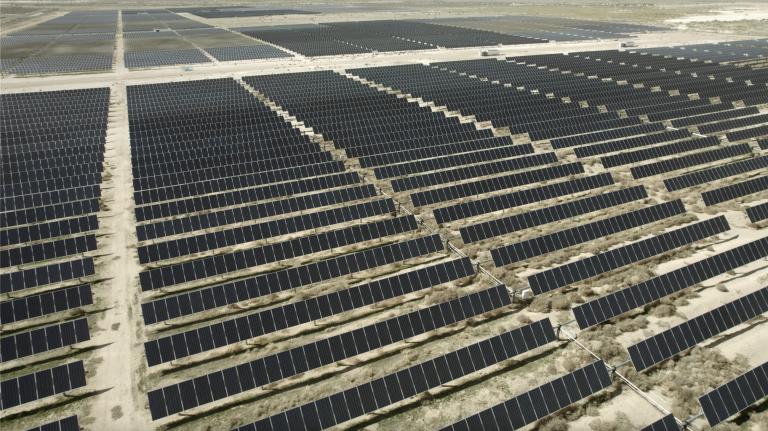
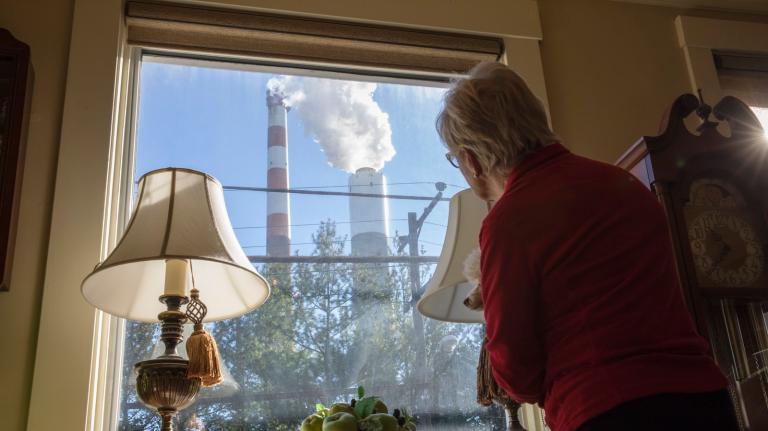
These have long been one of the chief stumbling blocks in the negotiations, a new bout of which opened in Bonn at the beginning of this week. These emissions are increasing fast; China’s carbon dioxide emissions doubled in just ten years between 1996 and 2006, and the country is believed to have recently overtaken the United States as the world’s biggest polluter. China announced in January that it planned to increase coal production by another 30 percent by 2015.
Though everyone accepts that the world’s rich nations will have to make the biggest and earliest emission cuts, the climate simply will not be able to tolerate the increasing pollution from the rapidly industrializing world. Though both China and India have already taken some strong measures — particularly in boosting the use of renewables — the two countries say that there is a limit to what they can do. The Chinese regime even privately fears that really tough action could bring an end to the Communist Party’s 60-year lock on power.
The rapidly developing nations point out that it was industrialized countries that caused the problem in the first place, and that their per capita emissions remain far lower than in the developed world. And they add that much of their pollution results from making goods for export to rich countries, and so they should therefore not be held responsible for them.
The first two of these objections is widely accepted and is among the principal reasons why even the fastest growing developing countries will not be required actually to cut their emissions under a new treaty. But the final one remains highly controversial and hotly contested.
Yet there is some justice to it. Up to a quarter of China’s emissions result from manufacturing products for the United States and European markets, according to studies by the prestigious Tyndall Centre for Climate Change in Britain and the New Economics Foundation.
And a report by the Stockholm Environment Institute and Sydney University, on behalf of the British government, demonstrated that when these manufacturing-related emissions and emissions from aviation and shipping are taken into account, the UK is responsible for 200 million tons more carbon dioxide than official figures show. Such fuller accounting reveals that instead of Britain’s emissions of the gas dropping by 5 percent since 1992, as its ministers constantly boast, they actually rose by 18 percent.
Nick Stern’s suggestion broke with the developing world’s party line on emissions by accepting that the Chinese and Indian case is “very sound” — “There is a definite responsibility with the consumer and not just with the producer,” he said. And he suggested that since “both parties gain” from the process, the importing and exporting countries should take joint responsibility for the emissions.
The former long-serving Swedish prime minister, Goran Persson, has recently made the same point. Speaking in Beijing last month, he said that developed nations should shoulder some of the responsibility for developing country emissions since they “exported production of some energy-wasting goods to those economies.”
It’s early still, and there is a huge distance to travel in the six short months before the opening of the Copenhagen conference. But it just may be that Nick Stern has mapped a route to a successful conclusion, one that could allow for more forward movement than is likely to result from the talks that opened on Monday in Bonn.
—
Below, Lord Nicholas Stern discusses an April 2009 report by the Asian Development Bank on the economics of climate change in Southeast Asia.