You Can Go Your Own Way

California plans no exit from hydrogen highway 39

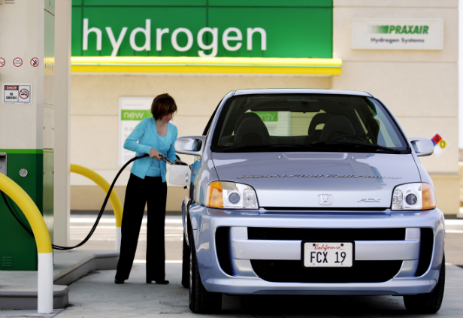
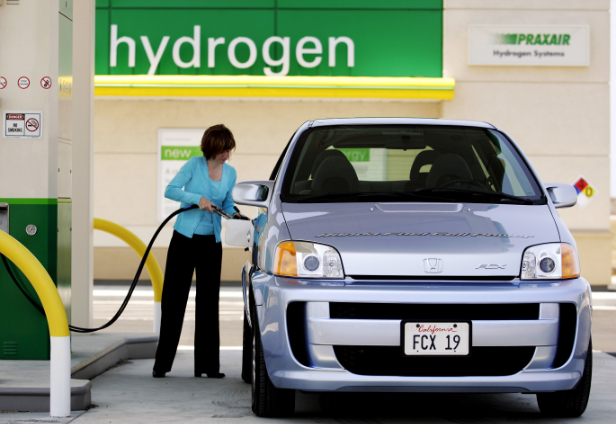
Hydrogen fuel station near LAXCalifornia is planning to invest millions to support the rollout of new hydrogen fueling stations. Pictured here is a station near Los Angeles Int’l Airport that was built by a partnership that included BP, Praxair and LAX.Courtesy Hydrogen Assn.

Energy Secretary Steven Chu may want to slam the brakes on future hydrogen funding, but California will continue to pay its own way down the Hydrogen Highway, infuriating electric vehicle advocates in particular.

Obama’s top energy official cut more than $100 million slated for hydrogen fuel-cell research from next year’s federal budget, arguing that in tough times, tough choices had to be made. His department will allocate nearly $800 million from the American Recovery and Reinvestment Act for advanced biofuels research and commercial-scale biorefinery projects, part of his area of expertise at Lawrence Berkeley National Laboratory before he joined the Obama administration.

In California, however, state lawmakers and regulators are handing out more money for hydrogen projects. Shell Oil, for example, will receive nearly $2 million in state funds to help build a hydrogen pump at a gas station near a swank Newport Beach country club and high end shopping mall. The pump will service a few dozen cars. State officials and hydrogen backers say it is a small but key step forward in solving the nation’s energy and environmental woes. An additional $5 million in tax dollars will help build hydrogen fueling pumps near UCLA’s campus, San Francisco Airport, and at the foot of wealthy southern California coastal communities.

Despite the state’s massive budget woes, officials also approved another $120 million in alternative fuel expenditures, paid for with revenue generated from fees of about $10 recently tacked onto the costs of renewing a driver’s registration. Hydrogen and electric plug-in technologies will both fare well, getting an estimated $40 million and $46 million respectively from the state.

But electric vehicle advocates said even those expenditures prove their point: According to the California Energy Commission, it will cost $40 million to build 11 hydrogen fueling stations, compared to just $12 million cost to build 6,500 EV charging stations.

Critics of Gov. Arnold Schwarzenegger’s (R) much ballyhooed “Hydrogen Highway” program, unveiled in 2004, say the hydrogen funding is the latest outrage in a doomed and costly effort to convert drivers in the nation’s most populous state to a still unproven replacement for gasoline. California is reeling from a potential $20 billion budget shortfall, but critics say oil companies and car manufacturers will continue to be prime beneficiaries of costly, state-funded hydrogen boondoggles.

By contrast, Chu’s announcement left them dancing metaphorically on hydrogen’s grave.

“California is pouring good money after bad down the hydrogen rat hole, at a time when we can least afford it. They’re spending taxpayer dollars for a technology that doesn’t work, and I object,” said Paul Scott, vice president of Plug In America, an electric vehicle advocacy group. He was far happier with Chu’s decision to cut off funding for hydrogen fuel research in next year’s federal budget. “Listen closely ... that sound you hear is the banging of the final nail in the fuel cell coffin. Sweet music to our ears,” he wrote in an e-mail.

Jay Friedland, also of Plug In America, said studies had shown it takes four times as much funding to build and fuel a hydrogen vehicle as an EV car. Chu appeared to echo that sentiment, joining fellow scientists, engineers and policymakers in questioning the commercial viability of creating clean hydrogen fuel on a broad scale any time soon.

But boosters retort that Chu erred, and they will look to Congress to rectify that error.

California air board staff and hydrogen advocates said the latest state spending was a critical long-term investment. Hydrogen is the least polluting vehicle fuel on earth, they say, and continued funding now will pay off by 2050 in sharply reduced greenhouse gases and other air pollution, as well as new jobs.  Most important, it is vital to keep funding a mixture of possible fuel options until it becomes clear which is truly commercially viable.

They insist other studies have shown that hydrogen has as good a chance as battery powered cars.

“Steve is making a major mistake on several fronts,” said Schwarzenegger’s longtime environment adviser Terry Tamminen in an email. “First, many automakers that are heavily invested in hydrogen ... were not consulted on this decision, showing that our new Secretary could use some help with stakeholder outreach and diplomacy at the very least.”

As for California’s spending, he wrote, “I think taxpayer dollars earmarked for developing new/clean technologies are very appropriate… in bad times, we see even more clearly the cost of failure to invest in this important infrastructure. GM is dying at great cost to taxpayers; hundreds of billions of subsidies…to oil companies are essentially wasted. By contrast, when we supported development of high tech, we ended up with Silicon Valley and the trillions of dollars that has delivered to CA and the US in terms of jobs and taxes. You be the judge!”

California air board chair Mary Nichols, who has repeatedly sought to defuse competition between competing alternative fuel advocates, wrote to Chu on April 1 and copied the letter to Obama environmental adviser Carol Browner, EPA administrator Lisa Jackson and White House Council on Environmental Quality chair Nancy Sutley, begging for continued hydrogen fuel cell funding as part of broad-range backing.

“Today it is not possible to know which technologies will be the market winners, but given that our global climate and future mobility are at stake, we must pursue all promising options. Fuel cell vehicles, with their potential to provide the range, high efficiency, rapid refueling, and performance consumers expect while achieving zero tailpipe emissions and dramatically reduced greenhouse gas emissions, are one of these options,” she wrote.

Nichols noted hydrogen fuel cells were also “unique in their ability” to potentially power other current high polluters such as ships, locomotives and scooters. In a statement, she praised the state’s latest expenditures.

“Hydrogen is one of the many fuels in California’s future. But we need to cultivate the industry’s early growth. This grant money will nurture a burgeoning technology that will provide jobs, invigorate our economy, and provide the state with clean power.”

Anthony Eggert, Nichols’ science and technology adviser, said late Tuesday that state officials were “puzzled’ by Chu’s decision, and that it would “obviously be a blow” to continued hydrogen technology development. He said the agency and a consortium of state fuel cell backers would push Congress to restore hydrogen funding in the energy department’s final budget.

Asked for comment about Californians’ pleas and criticisms, Chu’s deputy press secretary, Tiffany Edwards, said in an email, “The President’s 2010 Budget seeks to usher in a new era of responsibility—an era in which we not only do what we must to save and create new jobs and lift our economy out of recession, but in which we also lay a new foundation for long-term growth and prosperity. The President and Secretary Chu are focused on investing in renewable sources of energy so that we can reduce our dependence on foreign oil and become the world leader in the new clean energy economy.  Change is never easy, but we must use our resources wisely in the short term if we are to transform the way we use and produce energy in the long term.”

As for California’s expenditures during tough times, Gerhard Achtelik, manager of the air board’s Zero Emissions Vehicle program, noted that it took a century and lots of money to build gas stations, as well. Explaining the latest round of California funding, he said in many cases it was matching money.

Shell was the highest bidder in an open process, he said, and will spend more of its own money than any other applicant. Shell’s project could also create hydrogen onsite, using a promising natural gas steam reformation system.

Achtelik said it was crucial to continue to fund a broad range of alternative fuel technologies, because while electric plug-ins and hybrid vehicles might be market-ready sooner, hydrogen-fueled vehicles would emit no pollutants, a giant step in helping the state meet its mandate to slash greenhouse gases and clear Los Angeles and the Central Valley’s still polluted air in coming decades. Critics of EVs note that plug in vehicles, by contrast, have a long way to go as well, because much electric power still comes from highly polluting coal plants.

Electric vehicle advocates dispute that, saying their cars can be plugged in at night in homeowners’ garages, to take advantage of burgeoning solar, wind and other renewable sources during off hours.

Part of the debate, like an old-fashioned schoolyard fight, reflects intensely personal differences about whose car is better. That schism has erupted repeatedly over the years between hydrogen and EV fans, with each side arguing their fuel is the one that will win out. Of late, EVs have been winning key laps. In addition to Chu’s decision, President Obama toured an EV test site in Southern California this spring, and has pledged to get a million plug-in cars on the road. But others say the wheels are not off hydrogen yet.

Tamminen, who drives a hydrogen-fueled Honda Clarity, said in an email that contrary to press reports, hydrogen fueled cars are “real and here right now ... I refuel at the Shell station on Santa Monica Blvd…and have driven the car all over CA with no problem.”

Noting that there are now 30 hydrogen stations in the state, he boasted, “I drive 250 miles and spend 5 minutes to refuel, while my friends with Teslas drive 120 miles and spend 4 hours recharging.”

He added that EVs “suffer from lugging around half a ton of batteries,” making the vehicles less efficient, and concluded, “May the best car win!”

But Scott, who drives one of the original Toyota electric vehicles featured in “Who Killed The Electric Car?” documentary, countered that he plugs his car into his solar powered Santa Monica home each night, and goes an effortless 150 miles or more on a single charge.

He said compressed hydrogen fuel, by contrast, is often trucked in by diesel spewing trucks to the few stations that do exist wiping out any clean air gains. He said that new, lighter batteries are being tested for EV cars, and that tens of thousands of electric vehicles could quickly be on the street. In fact, he noted, the filmmakers who shot the original documentary about how California’s air board decimated the original EV fleets are hard at work on a sequel: “The Revenge of the Electric Car.”

Next Page: Watch two videos about California’s hydrogen dreams >>>

Janet Wilson is a senior fellow at USC Annenberg’s Institute for Justice and Journalism, and a veteran environmental reporter based in California.

Advertisement
Advertisement
  1. Delay And Deny's avatar

    Delay And Deny Posted 12:49 am
    15 May 2009

    Hydrogen is the clear commercially sustainable winner in alternative fuels.  Business in hydrogen is set to boom with or without subsidies.   A robust set of small and midcaps has arisen in materials science and fuel cell technology but now it's time to get off the tit and start selling.The 21st century economy is ready to blossom due to blossom entirely due to hydrogen and it's courageous supporters! 
  2. Noah Pollock Posted 7:33 am
    15 May 2009

    Hydrogen has many critical obstacles to overcome, and I agree with the electric vehicle proponents that this is a mis-allocation of resources. Cynics viewed the Bush administration's investment in hydrogen simply as a way to maintain the "status quo" - instead of investing in technologies and policies that could actually make a difference - they invested in hydrogen systems - thereby not changing anything. Money will be much better spent investing in plug in hybrid systems. There are some ecological economists working on this issue at the University of Vermont's innovative Institute for Global Sustainability (http://learn.uvm.edu/igs)- as in many ways, the issue of hydrogen versus electric vehicles comes down to the concepts of both energy and financial returns on investments. The comparison of 6500 electric vehicle charging stations versus 11 hydrogen stations is an excellent example of different returns on investment. We do not have unlimited resources. In the Institute for Global Sustainability courses in ecological economics and sustainable business, students are asked to measure these trade-offs - for these decisions are key things environmental leaders most contemplate as we transition into a low carbon society.
  3. smithy Posted 7:45 am
    15 May 2009

    I watched a very informative documentary on hydrogen cars / bikes, It really does look like the future. I'm pretty sure it was a Honda prototype for the car, certainly looked great. When it becomes an affordable form of transport say goodbye to the fossil fuels.
  4. kudrea Posted 11:19 am
    15 May 2009

    The whole debate on hydrogen versus electric cars is bunk. The two technologies would be better off forming a coalition to support each other. Hydrogen fuel cell vehicles need battery technology to be viable, the Honda Clairity is essentially a hybrid vehicle, with a lithium battery pack that provides supplimental power. Hydrogen cars need batteries, EV do not need hydrogen, but they do take a long time to recharge, they are heavy, and the newest generation of batteries are not recyclable.Also as noted in the article, hydrogen has many potential uses besides just cars. Fork lifts are one example, hydrogen powered fork lifts have been successfully implented in factories essentially eliminating down time due to charging. If the battle continues to be hydrogen against electric, neither side is going to get very far. I'm sure the oil companies look at the debate with delight as it just reinforces the dominance of petroleum. If we are going to move away from fossil fuel based transportation, the alternative fuel tansporation comminity needs to work together not against each other.
  5. Paul Scott Posted 11:39 am
    15 May 2009

    This paragraph is why Hydrogen supporters are not to be trusted:"Achtelik said it was crucial to continue to fund a broad range of alternative fuel technologies, because while electric plug-ins and hybrid vehicles might be market-ready sooner, hydrogen-fueled vehicles would emit no pollutants, a giant step in helping the state meet its mandate to slash greenhouse gases and clear Los Angeles and the Central Valley’s still polluted air in coming decades. Critics of EVs note that plug in vehicles, by contrast, have a long way to go as well, because much electric power still comes from highly polluting coal plants."What Achtelik, Tamminen and all the other H2 supporters want you to believe is that their tailpipe emits nothing but water, zero emissions. Fair enough, but then they say that EVs, while emitting nothing when driven, get their electricity from dirty coal. What they fail to tell you is that their hydrogen is generated from natural gas through a process called steam reformation, and this method used 1.6 times as much electricity as an EV to go the same distance AND it release gobs of CO2 into the atmosphere. But wait, they say, we're going to use electrolysis to generate our hydrogen in the future and that process emits nothing since it uses electricity to split the water molecule. Problem is, this process, combined with the electricity they'll need to compress the H2 enough to get any range out of their car, will use up to FOUR TIMES the amount of electricity as an EV uses to go the same distance!No problem, Tamminen says, we'll use renewable electricity for that. Great! You have no problem using four times the electricity to do the same job which means you'll have to buy four times the solar panels as an EV driver to do the same work.Where is the environmental benefit, Terry?Don't tell us that EV drivers use coal electricity when surveys show that of all the California EV drivers, about half of them already use solar to run their homes and cars. Your arguments don't add up, and we're tired of you making false accusations about this issue.
    1. amazingdrx Posted 5:50 pm
      15 May 2009

      Yep, well said! To quote the article:Critics of EVs note that plug in vehicles, by contrast, have a long way to go as well, because much electric power still comes from highly polluting coal plants.Sorry nope. A very old talking point, refuted over and over here.Electric vehicle advocates dispute that, saying their cars can be plugged in at night in homeowners’ garages, to take advantage of burgeoning solar, wind and other renewable sources during off hours.Wrong again! but consistent.Hydrogen is made from foassil fuel, with the CO2 emitted into the air.  Or it is made from water with electrolysis using the same electrical sources that charge EVs, very inefficiently.Plugin hybrids have the potential to eliminate 90% of fuel use and power cars from a 100% renewable grid, as that transition is made.  BUD in China has a 16k 60 mile battery range coroola style vehicle inmass production right now.  hydrogen can't get there from here, or anywhere.(one has to wonder about the scientific/technical expertise of the editor of this piece)http://amazngdrx.blogharbor.com/blog 
      1. racc Posted 1:08 am
        16 May 2009

        Electric vehicle advocates dispute that, saying their cars can be plugged in at night in homeowners’ garages, to take advantage of burgeoning solar...Yeah right. Maybe in Alaska during the summer. At least read this stuff over once before you post it. Even with power sources such as wind which might have spare capacity during the night, as batteries are expensive, people will buy the smallest batteries they can get away with meaning that they are likely to want to charge them at work after the morning commute meaning that a lot of the charging will add to the peak load.The other thing is that with battery technology moving along, batteries could be used to store the power at night for other purposes than to power cars. This could dramatically increase the speed at which we could reduce dependance on fossil fuels to generate electricity IF we don't waste this electricity on powering cars.
    2. Calisteve Posted 6:29 pm
      17 May 2009

      I'm no expert in fuels or cars. Looking at the current research, I can't find any facts to back up Mr. Scott's comments about EVs being more efficient or producing less CO2 than fuel cell cars. All the research shows that they are so close to each other that it's a wash. Either Mr. Scott uses old research or he's repeating Joe Romm's bad science.I am an expert in consumer behavior. Mr. Scott states that the EV owners he knows have solar panels. Bully for them, but they are the minority. For a product to succeed--and cars are products--they have to be easy, convenient and cost efficient for most people. The same people who buy prepackaged food because it's easier than cooking from scratch, shun flourescent lightbulbs because they cost more and only recycle if it requires no extra effort.We need battery cars for the people who will change their lifestyle to be more efficient. We need fuel cell cars to meet environmental goals via people who will not change their lifestyles. 
      1. Christopher S. Johnson's avatar

        Christopher S. Johnson Posted 7:14 pm
        17 May 2009

        The cost of an infrastructure for hydrogen has to be billions and billions of dollars.The cost of an infrastructure for a plug-in hybrid is an extension cord from Target.And I'm not going to change my lifestyle much. 95% of the time I drive less than 40 miles per trip. A plug-in with a 40 mile battery and a regular gasoline engine means a 95% reduction is gasoline use.And if my power is coming from renewables in the near future, then that is a 95% CO2 reduction as well.I'm not anti-hydrogen in general, as a concept. That would be dumb. But the amount of heavy lifting to get mass acceptance at a fast rate goes to the plug-in hybrid. Like right now. Hopefully A future scenario, or heavy trucks, or planes can accelerate the use of hydrogen in the mean time. Good luck.
    3. JJPRO Posted 3:14 pm
      22 May 2009

      Yeah, Right Paul.What a nice thing to say about the all the people that rightfully support hydrogen energy technologies, and have been for decades.  I guess you can't trust NASA, the governments of Germany, Japan, Norway, Argentina, Italy, England, France, Spain, all of the EU for that matter, the US, Canada, Mexico, China (well you know what I mean), India, Iceland, Turkey, Russia, even Saudi Arabia, and on and on, all of whom have hydrogen programs and projects.Paul, get your facts right before you make general and blanket comments about the technologies and those that support them.I would love to ride with you in your BEV to San Francisco from Los Angeles.  Oh, that is right, we would have to stop overnight to recharge along the way.  Oh, that is right again, where would we do that?  Do we have the right connector and equipment?  Oh, that is right again, I would have to sleep in my clothes because I wouldn't have room for a bag because the batteries are occupying all the space!  Energy density for batteries is a little bit of a problem, wouldn't you say.  Recharging times is a little bit of a problem, wouldn't you say.  Infrastructure for pure BEVs is a problem wouldn't you say. Get real.
  6. racc Posted 3:09 pm
    15 May 2009

    Both electric and hydrogen cars are disparate measures to try and preserve the status quo. With crumbling highways and bridges, we can't even afford to maintain infrastructure for the current levels of driving much less fund any increase. It is time to bite the bullet and massively invest in real sustainable transportation solutions like high speed rail, mass transit and cycling. In a world of eight billion people, there is no room for cars no matter what they are powered by.
  7. rotalihinna Posted 3:22 pm
    15 May 2009

    Every time I perform a research on alternatively fueled cars, I find out that hydrogen powered cars are much less effective than electric cars. Have any of you seen the documentary "Who Killed the Electric Car"? It's amazing how effective it is.
    That being said, an electric car's electricity is from the city lines which can mean it's from fossil fuels anyway, but the efficiency of the electric motor is uncomparably high relative to internal combustion engines.
  8. Janet Wilson's avatar

    Janet Wilson Posted 3:26 pm
    15 May 2009

    Got an e-mail from Terry Tamminen as follows:"My only suggestion is that in the future, you make it clear that both
    hydrogen and batteries are sources of power for electric cars. There is no
    competition between electric cars and hydrogen cars - - only between
    batteries and hydrogen as a fuel source."Duly noted.JW   
    1. Earl Killian Posted 8:04 am
      28 May 2009

      One reason that the dispute between EV and hydrogen advocates generates so much more heat than light is that often the PR people don't actually understand the technologies they promote or attack. Terry Tamminen calling batteries and hydrogen "a fuel source" is a perfect example. Batteries and hydrogen are energy storage mechanisms.The fuel sources for these storage methods could be many things, including sunlight, wind, natural gas, coal, geothermal, nuclear, and so on. For batteries, all of these are first converted to electricity and delivered over the grid to the vehicles, which stores the energy in a chemical reaction in the batteries, which is then reversed to power the electric motor. Except for natural gas, the pathway to store energy as hydrogen is similar, convert to electricity, and then use electrolysis to generate hydrogen, which is pressurized to 10,000 psi, pumped into a tank in the vehicle, and then converted back to electricity in a fuel cell. Ignoring natural gas for the moment, the fact that the starting and ending point for the two pathways is electricity makes it very easy to compare them, with the result that the hydrogen pathway is always seen to require 2-4x the starting electricity of the battery pathway. One can argue where in that range hydrogen will be someday, but no one that I know in the hydrogen world has ever claimed the result is less than 2x. Thus one needs at least 2x, and perhaps up to 4x the coal, sunlight, wind, nuclear, etc.The coal candard used against EVs can be seen to be quite silly in this context. Unless we build a hydrogen pipeline system of enormous scale, hydrogen will be made locally from electrolysis or steam reformation of natural gas; for local electrolysis the energy will come from the grid. If the grid is coal-powered, then the hydrogen pathway requires 2-4x as much coal. If it is solar powered, then the hydrogen pathway requires 2-4x as many square miles of solar concentrators. If the grid is nuclear powered, then it takes 2-4x as much nuclear power plants; and so on.The other pathway for storing energy in hydrogen is steam reformation of natural gas. The issue here is that this process produces greenhouse pollution. The greenhouse pollution numbers for this process are known (I can post more details if anyone wants), and the issue is that it is not enough cleaner than gasoline to get us where we need to be on global warming. Therefore we are back to starting with electricity from non-fossil sources (wind, solar, etc.) and the 2-4x issue.
  9. Bart Anderson's avatar

    Bart Anderson Posted 4:41 pm
    15 May 2009

     Terry Tamminen wrote:both hydrogen and batteries are sources of power for electric cars.We need to get this straight --  neither hydrogen or batteries are sources of power.  They are energy carriers.  How the power is generated is a different question altogether.There are many different questions wrapped up in this debate. The cost of re-tooling for a new infrastructure, whether it's electric or hydrogenHow the energy will be generated to create the hydrogren or charge the batteries.Whether we can afford personal transport, as we've been accustomed to. Can we afford it economically or environmentally?Considerations of efficiency and Energy Returned on Energy Invested.I am put off by the large propaganda element in the arguments for hydrogen. As far as I can see, hydrogen is not viable for widescale use  There may be some niche applications, but hydrogen as a whole seems to me to be an eco-boondoggle.Electricity seems much more flexible and realistic. I do not think widespread use of EVs is desirable or possible in the long-run, but developing this technology does make a lot more sense.Bart / Energy Bulletin 
  10. Christopher S. Johnson's avatar

    Christopher S. Johnson Posted 3:32 am
    16 May 2009

    Nobody is against hydrogen developing and becoming all it can be.  Its just a battery, after all.  But my interest is in the most displaced CO2 possible, by the largest group of people, at the fastest rate of adaptation, for the least amount of money, and still own a personal vehicle.  I believe that is a plug-in hybrid with a gasoline or CNG tank paired with lithium ion batteries, at this date in time.Correct me if I'm wrong.  Isn't this an old topic here at Grist?   Was there a new breakthrough in hydrogen creation efficiency I missed in the past six months?I'd love to see planes fly on it, though.
  11. JJPRO Posted 8:35 am
    16 May 2009

    Hydrogen Is One of the Best AnswersPeople who bash hydrogen either haven't done their homework or are shills for some other industry.  The "battery" people have gotten really good at it.  I am not against batteries, per se, but why haven't batteries progressed to the point of mass acceptance in transportation?  They only have had over 120 years to do so.  Battery people are not honest about the shortcomings of batteries.  Batteries are heavy, have very poor energy density (200x less than hydrogen by weight), are still expensive, have long recharging times, provide limited range, and never perform like advocates promise.  Batteries are not a panacea.  Yes, batteries deserve more research, but so do hydrogen-energy technologies.The Rand Corporation, the countries of Japan, Germany, Iceland, and others, the World Resources Institute, the Rocky Mountain Institute, etc. all look upon hydrogen as favorable or the ultimate energy end game. Renewable energy, with hydrogen and electricity as the energy carriers, is the gold standard in clean-energy economies.  And, yes, batteries have a role to play as well.People also are not looking at generation potential with hydrogen.  By that I mean, hydrogen has many different feedstocks and can act as an energy commodity where others just can't compete.  Hydrogen has many different uses.  Hydrogen combines electricity with forms of energy use that we are accustomed to. Hydrogen is a storage medium that lets us use energy where and when we need that energy, in transportation and in stationary applications.  Batteries are just a storage medium for electricity, just like hydrogen.  But it is easier to transport BTUs in the form of hydrogen than in heavy batteries.  Even Dan Neil admits that batteries won't be playing a role in the heavy duty sector, but he sees hydrogen fuel cells as a viable alternative.Also, the efficiency argument against hydrogen is a specious argument, just look at the Well-to-Wheels overall efficiency and emissions of all the transportation fuel pathways published in Argonne National Laboratory's GREET study.  It is more energy efficient to use hydrogen from natural gas in a fuel cell than to burn that natural gas in an internal combustion engine, AND you get a 60% reduction in CO2 emissions over a standard gasoline-powered vehicle.  The consumer doesn't care about efficiencies; they care about how much it costs them to drive a mile on a particular fuel.  Given that yardstick, hydrogen competes today with any fuel and drivetrain pathway out there.Give hydrogen a fair shake, it deserves it.I recommend that people read "The Hydrogen Age, Empowering a Clean-Energy Future".
    1. amazingdrx Posted 7:41 am
      20 May 2009

      "Give hydrogen a fair shake, it deserves it."Take your own adbice, all I'm seeing in your comment is failed talking points. Defeated here in the past over and over again.http://twitter.com/amazingdrx
      1. JJPRO Posted 10:33 am
        20 May 2009

        If you have counter arguments then bring them up and give support for them.  It is a cheap shot to criticize a comment without any factual context.  At least bring something constructive to the table, and do your homework.I also want to say here is that hydrogen and batteries NEED each other in order to succeed in the market place at the current time.  So, if the battery people were smart, they would be embracing hydrogen-energy technologies.  Why is it that you always hear pure-battery EV people bashing hydrogen, but rarely hear hydrogen people bashing batteries? Talk to AC Transit in the Bay area; they are running hydrogen-powered hybrid buses.  They will tell you that it is the battery packs that give them constant trouble, not the fuel cells.  Fuel cell vehicles are hybrid electric vehicles. Since batteries have a role to play in that scenario I say to the battery people to please improve your technology and catch up with fuel cells!
  12. villafan Posted 11:12 am
    16 May 2009

    while there is no clear consensus on which technology to advance there isn't going to be much chance of achieving a great deal, unfortunately.Perhaps a smaller, easier to achieve and effective target might be to improve the efficiency of normal combustion engines....i read somewhere that european cars made by the likes of ford and gm give greater miles per gallon than us cars. Make the existing car technology lighter and less fuel hungry, the infrastructure is in place so you avoid massive spend and you get an environmental benefit.
    Still hats off to California for putting their money on the table in a grand experiment that im sure we all hope will work out.
  13. Bart Anderson's avatar

    Bart Anderson Posted 12:56 pm
    16 May 2009

    Villafan wrote:Still hats off to California for putting their money on the table in a grand experiment that im sure we all hope will work out.The problem is that we only have so much money/resources.  If we spend them on boondoggles, we will not be able to develop the solutions that will be needed.There is so much wishful thinking, so much hype surrounding all these technologies. To recapitulate: corn ethanol, carbon sequestration, hydgrogen, bio-diesel, massive upscaling of renewables.If we don't see things clearly, we will misallocate resources.  As physicisist Richard Feynmann said in his report on the Challenger disaster:For a successful technology, reality must take precedenceover public relations, because nature cannot be fooled. Bart Anderson
    Energy Bulletin
    1. racc Posted 2:32 pm
      16 May 2009

      Exactly. Taking about boondoggles, the age of the automobile will be remembered as the largest waste of resources and energy ever in human history. We had an opportunity to create an amazing world and instead squandered the opportunity on ugly highways, boring sprawling subdivisions, and disposable automobiles. Why we want to continue this by these desperate attempts to substitute electricity or hydrogen for gas is really puzzling. Instead lets use this opportunity to make the world a better place to live in.

      Which is why we need to devote our limited resources to building the transportation solutions of the future such as high speed rail, rapid transit and cycling. High speed rail uses proven technology and is better and faster transportation than the automobile. Electric and hydrogen cars are both more expensive and are less convenient for the foreseeable future than automobiles today. And don't forget, our highways and bridges are crumbling and need hundreds of billions of dollars to just keep them in usable shape,

      The other thing great about high speed rail is it reduces the need for cars to be able travel long distance thus it makes small, efficient, inexpensive neighbour electric vehicles more viable.
  14. human power Posted 12:02 am
    17 May 2009

    From the article:"Part of the debate, like an old-fashioned schoolyard fight, reflects intensely personal differences about whose car is better."And like an old-fashioned schoolyard fight, all involved are wrong. Everyone wants to be able to say and show that they are green and sustainable and will pay any price, as long as it does not involve any potential to sweat. RACC has it right, the era of the killing machines you call cars and I call two-ton wheelchairs must come to an end. This old man is constantly disheartened at how lazy and physically unfit my nation has become, largely due to overuse of said wheelchairs.We can leave a livable planet to our grandchildren, or we can drive our species (and many others) to extinction. Which do you love more?
  15. Christopher S. Johnson's avatar

    Christopher S. Johnson Posted 1:20 pm
    17 May 2009

    I'll keep my car, thanks.  But you are welcome to give up yours.  What I will do is this:• telecommute• take trains for intrastate travel (L.A. to S.F.) that isnt camping trips.• buy the most carbon free American vehicle available that can still move video production gear around, and at under $30,000.•  orchestrate daily life where work, home, and shopping needs are within a short distance.But unless I'm living in Manhattan, I'm not going to stop owning a car.Transport is now about 25% to 30% of the CO2 problem.  Passenger cars and trucks are even less than that.  My Ford Escape hybrid produces the same CO2 as a Honda Civic or Fit, and even less evaporative and sooty emissions than those vehicles.But of course that isnt adequate yet, so I'll get the plug-in version within the next 24 months and the full electric another 24 months or so after that.In the meantime, I'll work tirelessly to get representatives elected who will legislate CO2 free electricity sources be mandatory.  I voted for Obama and Waxman, and they got elected.But I have no interest in giving up my car.  
  16. Bart Anderson's avatar

    Bart Anderson Posted 11:07 am
    18 May 2009

    Christopher S. Johnson:I have no interest in giving up my car.The problem isn't your car or my pickup truck, Christopher.  The problem is the infrastructure of personal vehicles and highways.  You may cut your carbon footprint, but you (and we) are supporting a system which has no future.The problem is that we are not alone. The Chinese and Indians are copying our insanity, and there is no way that earth can support billiions more vehicles, even if they were to be low-emissions (which they won't be). Remember too that every new vehicle, every change in the infrastructure, requires energy and resources for its manufacture.I still have a car, but like you I'm arranging my life so that I hardly ever use it. It actually has cobwebs on it! We really should separate the personal from the policy, otherwise we fall into the trap of ad hominem argument. Suffice it to say that it is hard to do without a car in present-day America, but ALSO that a transport system based on the car is not the way to go.  For environmentalists to try to keep the car-system going is as great an ecological sin as for the coal companies to keep burning coal.Bart Anderson / Energy Bulletin
    1. Christopher S. Johnson's avatar

      Christopher S. Johnson Posted 11:28 am
      18 May 2009

      Good points.Did you ever see the film, "Minority Report"?  There was a great visualization of individual vehicle ownership.  It had a "hybrid" road system, where in the city, it became much like an automated train of cars, and the flow was highly controlled for efficiency, but the same vehicle could also be taken off of the grid to the countryside, where it behaved normally.  I'm sure the costs and taxes were high for individual ownership too, like London's inner city access toll.  That's fine.  Charge me.  I understand the cost of ownership should reflect reality.The other issue is that I have future plans to live in a more rural area.  Another benefit of telecommuting. 
  17. splashy's avatar

    splashy Posted 3:05 am
    19 May 2009

    I'm thinking one of the issues is that really the EV infrastructure is already built, in the form of our electrical grid. The hydrogen infrastructure is pretty much non-existent.Hotels, restaurants, and other places that people park could put in charging stations realtively easily, just by running a wire from their establishments to the stations and putting in the individual meters. Then it would just be a matter of using your card, or putting in money or having an account somewhere that you could pay monthly. Electricity can be generated in so many ways, it seems far more versatile.Hmm, I'm thinking the oil companies are scared they either will be cut out of the pie, or will have to pay the electric companies for the power. With hydrogen, they can continue as they have always done.
    1. Calisteve Posted 1:45 pm
      19 May 2009

      Our existing electric infrastucture is past capacity. In California, there's a debate about where to run new power lines to bring renewable power from up north to the Bay Area. The 600 miles of line are expected to cost $1.5 billion.I see one big difference between building a station and upgrading power lines. A station is paid for by a company--usually a small business--that hopes to turn a profit by selling fuel to people who need it. Power lines are paid for by all ratepayers, regardless if they are using more electricity than they used to. (Admittedly, both get government assistance.) In the case of these new powerlines, I'm going to help pay for them to deliver electricity to cities more than 100 miles away just because it's my utility district.Installing a charger at a business is not that easy. It's not a matter of putting in the charger, it's connecting it to the transformer, upgrading the supply from the street and figuring out how to pay for the electricity and who pays to repair the charger. It's also losing parking spaces for regular customers so that the EVs can park there. The two chargers that sit outside my office window have provided plenty of first-hand experience. 
      1. Christopher S. Johnson's avatar

        Christopher S. Johnson Posted 1:52 pm
        19 May 2009

        None of this is an issue for plug-in hybrids. Most folks wont need to charge at work at all. And almost no more extra electric capacity is needed when night charging at home.Besides, the efficiency upgrade of the electric grid is going to happen, and that's like extra power with NO new generation.
  18. greeniemeanie Posted 9:24 am
    19 May 2009

    People, people, people, it will come down as it almost always does ... to cost. California is working on "densifying" its cities to combat urban sprawl, but automobiles are seen as integral in the new future.Plug in hybrids are the lowest cost option for now. With economies of scale (ie, all that r&d being done), newer, bigger batteries will be developed, and we will end up off the gasoline/biofuel tit altogether.That will leave EVs and hydro. And BTW: both the EV and hydro powered auto market require a re-tooling of the fuel infrastructure.Right now, neither the vaunted Tesla not Honda's entre into the hydrogen market are up to snuff. The Tesla costs $150K and up; hydrogen is a half mill, but the company leases. All conspiracy theories aside, it will come down to cost. California is hedging its bets and backing both. If the feds had done their job in the last 8 years, California would be a thorn in their side, spurring them further and faster because California has specifics that need to dealt with, but since the feds are so far behind... California is doing the best it can to create a new dynamic.  
  19. bailsout Posted 4:38 pm
    19 May 2009

    Too bad that all the energy that goes into these arguments and all the monies that will go to new infrastructures and technologies couldn't be put into a comprehensive plan to reduce the population. Only then will we begin to tackle seriously the problems before us. Hydrogen fuel cells or batteries? I think we are arguing about where to set up the deck chairs on the Titanic.
    1. Christopher S. Johnson's avatar

      Christopher S. Johnson Posted 5:58 pm
      19 May 2009

      Women's rights and education are an effective path to population rate reductions. That's what the studies show repeatedly. Obama is already re-instating family planning funding (read - contraceptives) in global assistance packages (that had been removed).
  20. Bart Anderson's avatar

    Bart Anderson Posted 10:03 am
    20 May 2009

     Bailsout: Hydrogen fuel cells or batteries? I think we are arguing about where to set up the deck chairs on the TitanicNot at all. This is not a popularity contents, but an examination of costs and benefits. It makes a huge difference where society invests its resources - whether a technology is inherently flawed or has potential.  For example, corn ethanol, carbon sequestration and hydrogen seem to me to be boondoggles, whereas renewables, electric vehicles and walkable cities have a huge payback.About population, it is an issue, but as Christopher says, there are some significant answers such as women's rights and education. I would welcome a more educated discussion on population.  There is a glaring discrepancy between the repetitive cries for population control, and the wealth of information available on demographics, population control policies, etc.The basic flaw in the population argument is that it is not population alone, but  population times consumption which has an impact (the famout I = PAT forumla)
    http://en.wikipedia.org/wiki/I_PATBy concentrating on population, one shifts the responsibility from us consumptioin-hogs in the industrialized world to people in poorer countries.  Consequently, as Gus Speth of Yale notes, population is a favorite hobby horse of old white guys (like me). Bart / Energy Bulletin
  21. Trock2 Posted 6:02 pm
    21 May 2009

    Here's a link to a good webpage explaining with good graphics why batteries are so much better than Hydrogen from just the energy side.  http://www.physorg.com/news85074285.htmlCosts are also lower with batteries.    We all use batteries for most every portable electronic thing.   Why not hydrogen?   because of the cost.    it's 99.999 999 999 percent to that maybe 0.000 000 001 test hydrogen fuel cell out there being used in research.   Batteries rule.     There shouldn't even be a discussion about this.    Why are people being obtuse?  If batteries rule on everything with low power where hydrogen can maybe break in easier because of an advantage hydrogen might have with lasting longer than batteries and still can't overcome batteries by a large margin.    How is hydrogen going to take over a high power devise like a motor vehicle, where a battery/fossil fuel engine has a complete advantage in cost, flexability and distance?The debates over except for deadenders.
    1. Calisteve Posted 10:28 pm
      21 May 2009

      Because depending upon only one technology for all our transportation means we are people who cannot learn from the past.
  22. Janet Wilson's avatar

    Janet Wilson Posted 2:49 pm
    22 May 2009

    START YOUR ENGINESLove all the comments on the piece, thank you. Here's an addendum: California air board is holding a long-distance hydrogen car rally next week...JWhttp://www.hydrogenroadtour.com/Fuel-cell vehicles match gasoline-powered counterparts.

    FOR IMMEDIATE RELEASE
    May 21, 2009Annual road rally will highlight advances in fuel-cell
    technology

    Hydrogen powered vehicles near consumer readiness

    SACRAMENTO: Today the California Air Resources Board announced
    the 2009 Hydrogen Road Tour, an annual road rally to demonstrate
    the advancements in fuel-cell technology, will begin May 26 in
    San Diego, and end June 3 in Vancouver, British Columbia.

    Organized by the ARB, California Fuel Cell Partnership, National
    Hydrogen Association and US Fuel Cell Council, the tour will
    travel more than 1,700 miles and have 28 stops. The public will
    be invited to test drive the vehicles and experience first hand
    their range, performance and road readiness.

    "Fuel cell technology is on the verge of becoming a practical
    alternative to burning gasoline," said Air Resources Board
    Chairman Mary D. Nichols. "This year's road tour demonstrates how
    far the industry has come and how near we are to putting these
    cars in the public's hands."

    Currently, 300 fuel-cell vehicles have been placed on California
    roads and manufacturers expect to increase that to 4,300 by 2014.
    Fuel cell technology is also being used to power transit buses
    and forklifts, and to produce electricity for industrial uses.
    Examples of these will be showcased at some of the tour's stops.

    California is a proponent of diversifying the fuels used to
    power transportation. As part of ARB's 2006-2007 budget, the
    California legislature allotted $25 million for the purposes of
    encouraging the use of biofuels and high efficiency, low-emitting
    vehicle technologies. These funds were used to support projects
    that reduce air pollution and greenhouse gas emissions by using
    alternative fuels.

    In April 2009, ARB adopted a low carbon fuel standard fulfilling
    Governor Schwarzenegger's 2007 executive order. The regulation is
    aimed at driving down greenhouse gas emissions from the
    transportation sector, which accounts for 40 percent of the
    state's total emissions of climate changing gases. To achieve
    this goal 20 percent of petroleum used in California cars will be
    replaced with clean alternatives, including electricity,
    biofuels, hydrogen and other options by 2020.

    Recently, the Air Resources Board awarded Mebtahi Station
    Services, San Francisco Airport, Shell Hydrogen and UCLA $1.7
    million each to supplement the construction of hydrogen refueling
    stations. When these stations are constructed the amount of
    hydrogen available to the public will be double.

    "I'd like to congratulate the partnership, the individual auto
    manufacturers working to develop these cars and the companies
    installing needed refueling stations," Nichols added. "Their
    great progress secures our energy independence and defends the
    environment."

    The Air Resources Board is a department of the California
    Environmental Protection Agency. ARB's mission is to promote and
    protect public health, welfare, and ecological resources through
    effective reduction of air pollutants while recognizing and
    considering effects on the economy. The ARB oversees all air
    pollution control efforts in California to attain and maintain
    health based air quality standards.

    ##### 
  23. JJPRO Posted 11:07 am
    23 May 2009

    BEV "People" take note!  You really don't want to read this!Toyota Questions Cost, Batteries of Plug-In Hybrids (Update1) Please see Bloomberg.com article:  http://www.bloomberg.com/apps/news?pid=email_en&sid=arvp1GgT74o8
  24. racc Posted 1:38 pm
    24 May 2009

    150 and fifty years ago, the big transportation problem was trying to figure out what to do with all the horse manure. I suspect another problem was growing all the feed to fuel the horses. I'm sure a lot of bright sparks were figuring out all sorts of ways to figure out how to preserve the status quo by finding creative uses for manure. Well, the auto and truck came along transforming the transportation system and the problems with horse-powered transportation went away.

    Now 150 years latter, we are facing similar problems. Waste from automobiles creating huge environmental problems and dwindling fuel supplies for automobiles. Like the bright sparks 150 years ago, many people are trying to problem solve and preserve the status quo rather that creating better forms of transportation. I'm sure the reactions were the same 150 years ago. People are in love with their horses.

    We have the opportunity to focus our creativity and resources on transforming our transportation system and our world but we have to be willing to let go of the past. Face it. The age of the automobile is over. The solutions are high speed rail, rapid transit, cycling, bike sharing and probably some others that haven't been dreamed up yet. High speed rail is simply better transportation than driving. It is faster, more environmentally sound, more comfortable and safer.

    An example of these bad ideas is so called "Better Place"'s battery swapping. People are right that most trips are short so people won't need to swap for everyday trips. They will need to swap for longer distance trips. Only problem, people usually want to make these long trips all at once. Long weekends for example" So, a company is going to maintain a huge inventory of $5000 batteries and build thousands of swapping stations with the storage for these batters that will be only used a few times a year.

    Even worse, while claiming a range of 100 miles for batteries, this will only be true for low speed trips in an unloaded car with only the driver. Put 5 people and their luggage in a car and travel at highway speeds with air conditioning on, the range will plummet to likely less than 60 miles. Are people going to be willing to stop every hour for batteries and wait in line ups for everyone else who wants to swap batteries? Not likely. And is "Better Place" going to wait until night to charge those batteries? Probably not. They will want to charge them right way so their inventory of costly batteries that will likely be quickly obsolete due to advances in technology can be smaller.

    The great thing about high speed rail for long trips, is it solves the range problems with electric cars. Instead of trying to design complicated and unworkable non-solutions to make electric cars for long range trips, use rail for the long range trips instead. Then use small neighbourhood electric vehicles for what they are good for. Short trips around the city. Since they won't have to survive high speed collisions, they can be very light weight.

    Please realize that we need solutions that work practically on a large scale and realize that people want better solutions, not expensive non-solutions that are less convenient and not workable.
  25. Janet Wilson's avatar

    Janet Wilson Posted 4:29 pm
    27 May 2009

    Governator, Terry Tamminen, Shell Oil and car potentates did the hydrogen race thing today in LA today-Check out last graf of whole long transcript for Arnold's answer on continued public funding: Transcript
    of Governor Schwarzenegger Joining Annual Hydrogen Road Tour to Highlight
    Advances in Fuel-Cell Technology   Time:               9
    a.m. Date:               Wednesday,
    May 27, 2009 Event:              Press
    Conference, Shell Station, 11576 Santa Monica Blvd, West Los Angeles, CA   ANTHONY EGGERT:   Good
    morning, everyone. Welcome to the sixth stop on the 2009 Hydrogen Road Tour. My
    name is Anthony Eggert and I am the senior policy advisor to the chair of the
    California Air Resources Board. The Air Resources Board is excited to be a
    partner in this unprecedented trip. This nine-day tour, from border to border,
    through three states and two countries, will give thousands of people a
    first-hand experience with fuel-cell vehicles. During the drive we will
    demonstrate that hydrogen fuel cell cars can give people the performance they
    expect, including long range, fast acceleration and rapid refueling, all in a
    quiet and comfortable ride, everything a family could want for a nice West
    Coast vacation.   We are very
    pleased to have the following speakers with us today, including Duncan Macleod,
    vice president of Shell Hydrogen; Los Angeles City Councilmember Bill
    Rosendahl; Eamonn Percy, president and chief operating officer of Powertech;
    and Stephen Ellis, manager for fuel cell marketing, America Honda. And I also
    see we've been joined here by Terry Tamminen, special advisor to the Governor
    on the environment. Welcome, Terry. One of the actually key architects of the
    Hydrogen Highway as well.   And we are
    especially honored to have with us the California governor here today to say a
    few words about California's commitment to a clean energy future. Please
    welcome Governor Arnold Schwarzenegger. (Applause)   GOVERNOR SCHWARZENEGGER:   Well, thank
    you very much, Anthony, for the nice introduction. And I also want to say thank
    you to Councilman Rosendahl for being here today. He made it on time, exactly,
    thank you very much, although he got stuck in traffic. Then Duncan Macleod from
    Shell Hydrogen, we want to thank him also and also for their great partnership,
    because we are right here at their fueling station. And what a spectacular
    fueling station, a great model for the rest of the country and the rest of the
    world, so thank you very much for your great efforts.   And then
    Eamonn Percy with Powertech, we want to thank him also very much for the great
    effort and for the great partnership. And Stephen Ellis with Honda. And of
    course I just got the Clarity, which is a wonderful hydrogen vehicle. I love
    that car. As a matter of fact, we're all fighting over who is driving it; my
    daughters want to drive it all the time and take it away from me. But anyway,
    so it's nice to have a little fight like that.   But anyway,
    it's nice to celebrate with all of you here today and look at the fantastic
    cars that the Hydrogen Road Tour has brought to us. They're right here behind
    us. They're all operating on hydrogen or fuel cells and they are all producing
    water rather than pollution. And this is exactly what was our vision a few years
    ago. I remember when we came into office Terry and talked about that -- there's
    Terry Tamminen right over here, who has been my advisor for many, many years
    when it comes to environmental issues and he has been a terrific leader and
    helping me a lot. And we talked about that just years ago, about this vision
    and now it's becoming a reality. It's really great to see that.   California
    set out to prove to the nation and to the world that hydrogen vehicles can use
    now the roads and the highways. They are safe, they are affordable and they're
    viable. And that's why we launched the landmark Hydrogen Highway, because years
    ago they always talked about we don’t want to produce hydrogen vehicles
    because there are no fueling stations around.   So I said,
    "Well, let's get started with hydrogen fueling stations." And we
    started building the first one, the second one and now in the meantime we have
    26 fueling stations all over the state of California. And we put hundreds of
    fuel-cell vehicles and buses on the roads to be tested by government and by
    businesses; they have traveled more than 2.5 million miles on California roads.
    And the state of California has also invested $24 million since I have come
    into office, invested in our hydrogen future and that has been matched by $300
    million a year in funding from the auto industry, so they have been really
    terrific partners on this.   And now we
    are on the cusp of a new phase and the new phase I'm talking about is that
    automakers from around the world are now choosing California as the place to
    roll out their fuel cell vehicles to our consumers. Southern California will be
    the home of the single largest fleet of hydrogen cars in the world -- the
    single largest.   And we will
    create the hydrogen communities, hydrogen communities in Santa Monica and
    Irvine, Torrance and in Newport Beach. And this is only the beginning. By 2011
    automakers will have 700 fuel-cell vehicles in the state of California and by
    2014, 4,300 fuel-cell vehicles and by the year 2017, 50,000 vehicles, so this
    is really amazing. And, of course, when you look at the total amount of cars
    that we have in California, it's maybe just a small portion. But remember,
    every marathon starts with that first step. So the automakers have invested as
    much as $1 billion each to get fuel-cell vehicles here, to the stage where they
    are today, so we are very proud of them and the great effort that they have
    made.   And we, of
    course, want to have California be the place where it all happens and it is
    happening right here. Our goal is clean air for California, clean air for our
    children and for our grandchildren. We, of course, not only celebrate
    hydrogen-fueled vehicles, we also celebrate electric cars, battery cars,
    biofuel cars and all of this. We don't want to choose the winners; I think the
    market will decide that.   But last
    month another great thing happened and that is that our Air Resources Board
    passed the Low Carbon Fuel Standard here in California. This is the world's
    first such standard. It will ensure that the cleanest fuels, including
    hydrogen, will always have a strong market in California.   And the
    reason why this is very important is because so many times on the federal level
    they make decisions based on where the oil price is. And as we know, today we
    heard again that the oil price went up 11 cents a gallon. So that means that
    sometimes the federal government, when the oil price goes up, then they go in
    the direction of renewable energy and alternative fuel vehicles and all of
    those things. Then, when the oil price goes down, they abandon all those
    policies.   Well, we
    don't do that here in California. We stay put. We march forward. We only march
    in one direction and that is forward. We lead the way. As a matter of fact, we
    lead the way so much so that even the Obama administration has looked at
    California and said, whoa, those guys have something going there. Let's copy
    that. So last week President Obama announced a National Emission Standard
    patterned after California. So I think it is something that we can all be
    really proud of and showed great leadership. (Applause)   And we're
    not going to slow down. By 2010 we will have seven new hydrogen fueling
    stations here in California, accessible to the public. We will invest another
    $40 million in the next two years here in California on hydrogen fueling
    stations. As a matter of fact, we just talked about Shell that we're going to
    build hydrogen fueling stations all the way up to Vancouver and all the way up
    to the Olympics, that we'll have them ready. And also, all the way up to
    Alaska. We're going to go and move forward and build and build and build those
    hydrogen fueling stations.   California
    keeps pushing and thanks to your public-private partnership and thanks to the
    car manufacturers and thanks to the energy companies, that the era of
    pollution-free transportation is now around the corner. And so California will
    prove that we are not only the Golden State but we are also the greenest state
    and the cleanest state.   Thank you
    very much. And now I would like to have our next speaker come out here and this
    is Councilman Rosendahl, to say -- OK, fine, you're absolutely right. Duncan
    Macleod, please come out here and say a few words. (Applause)   DUNCAN MACLEOD:   Thank you.
    My name is Duncan Macleod and I'm responsible for Shell's global hydrogen
    business. And first of all, thank you, Governor Schwarzenegger, for your
    inspiring and optimistic words on the future of hydrogen transportation in
    California. I'd also like to thank Mayor Villaraigosa and Councilmember Bill
    Rosendahl and their respective staff for their continuing support, both during
    and after the construction of this station.   As you may
    know, we are meeting at the first integrated -- which means gasoline and
    hydrogen -- station in California. This site is the first piece of a cluster
    that Shell is developing for hydrogen fuel cell vehicle drivers in the Los
    Angeles area and, on a broader scale, it forms part of the California Hydrogen
    Highway that the Governor launched five years ago.   The highway
    is an excellent example of how this state understands the critical need for
    public-private partnership along all stages of the journey. This is something
    that Shell supports all over the world, working with governments, the
    automotive industry, NGOs, academia and customers, to make hydrogen a
    practical, safe and accessible fuel. That's why Shell is a founding member of
    the California Fuel Cell Partnership, which is celebrating its 10th anniversary
    with this Road Tour that we are part of today. Just as important, we're looking
    at the next 10 years and beyond that, because making hydrogen transportation a
    reality for significant numbers of drivers is a long-term project.   The
    California Air Resources Board under Mary Nichols is also an important partner
    and I'd like to thank them for their support for another station in our cluster
    that we're just starting in Newport Beach, which will be open early next year
    and like this one will be an integrated gasoline and hydrogen station.   Now,
    hydrogen stations don't make any sense unless we have vehicles to fuel in them,
    so we continue to work closely with several of the car companies that design
    and build hydrogen vehicles. We share plans; we align locations and timeframes.
    These partnerships are key for us and I'm very happy today to see the FCVs from
    GM, Daimler, Honda, Toyota, Nissan and others, Volkswagen, I'm sorry. They've
    all stopped here to fuel as part of this Road Tour.   So thank
    you, everybody, for coming to this station today. We just completed recently our
    1100th fueling since we opened last year. (Applause) And we look forward to
    continuing to work together with both the public and the private sectors to
    provide hydrogen, a clear path to make a difference in the future as it joins
    biofuels, electricity and other options in the low carbon mix.   Thank you
    very much, everybody and I'd like to introduce Councilmember Bill Rosendahl.
    Thank you. (Applause)   COUNCILMEMBER ROSENDAHL:   Good
    morning, good morning, good morning and welcome to the 11th Council District of
    the great city of Los Angeles, better known as the Coastal District. And
    especially I want to welcome our governor, who lives in this district, I might
    add and with his presence here we've got at least 10 cameras and the rest of
    the world here. And that's the point of it, is to show the world that we're
    moving forward. California once again is on the cutting edge of the new
    technology. We have to get away from gasoline if we want to live in the world
    in the future with the climate.   Governor
    Schwarzenegger has been a true champion of our hydrogen future. I was here a
    year ago and we cut a ribbon and opened this cutting-edge hydrogen station. The
    grand opening made a splash all over the world. Why? Because the world has been
    waiting for this. We can no longer depend on oil, be it the economic issues, be
    it the political issues and, most importantly, the climate issues, which are
    impacting all of us.   Fuel cell
    vehicles produce zero emissions and the only thing coming out of the tailpipe,
    as the Governor said, is a water vapor. The hydrogen at this station is
    generated using renewable electricity from LADWP, our power company, wind
    energy from the high desert that comes into the station via power lines. An
    electrolysis unit on the roof of the canopy produces hydrogen from the water,
    right there. A compressor pressurizes the hydrogen so it can power these
    vehicles.   We need
    more hydrogen fueling stations to build a robust fueling network that can
    support the vehicles of the future. This is a great partnership, as the
    Governor said. If you don’t have partners, you don't get anything going,
    be it the government, be it the private sector, be it right here at this
    station and Shell. This is a great partnership between government, encouraging
    innovation and clean technology and the private sector stepping up to the plate
    to deliver.   Climate
    change is here now. We must act to save our planet and hydrogen-powered
    vehicles will play a major role in our transportation future.   I now would
    like to introduce Eamonn Percy, who is the president of Powertech. (Applause)   EAMONN PERCY:   Well, good
    morning and thank you very much. We really appreciate the opportunity, on
    behalf of Powertech, to speak at this event and really strongly support the
    comments that were made earlier. British Columbia, like California, is a
    hydrogen and fuel cell leader. The BC Fuel Cell Sector has invested over $1
    billion in both public and private funds and created over 1,800 high-tech jobs
    in the hydrogen and fuel cell area. And, like California, British Columbia
    recognizes the importance of hydrogen, of fuel cells, for the environment, for
    the economy and ultimately for the future of clean transportation.   As the
    Governor mentioned, in 2010 Vancouver will very proudly be hosting the Winter
    Olympic Games and I'd like to take this opportunity to invite everybody to come
    up to Vancouver, have a great time for the Winter Olympics in February of next
    year. During the Winter Olympics we're going to have a fleet of 20 fuel-cell
    buses built by California's own ISE Corporation that uses Ballard fuel cells
    and these buses are going to carry literally hundreds of thousands of people
    from Vancouver to Whistler during the 17 days of the games. So this will give
    people a first-hand, close-up and personal experience with zero-emission
    fuel-cell vehicles, give them an idea of how the technology has developed and
    what the speed and the performance and how quiet these vehicles are and they'll
    be just as amazed as we are with these vehicles in front of us here today.   The ties
    between California and British Columbia are strong. Together we've been working
    with Oregon and Washington to reduce greenhouse gas emissions from
    transportation by creating the Green Highway along the 1-5 area, linking the
    California hydrogen stations with the five Vancouver-area stations that already
    exist. These ties are absolutely instrumental in building the fuel cell and
    hydrogen clusters both here in California and in Canada.   Powertech's
    commitment to this technology is we are providing, a first for the hydrogen
    vehicles, we're using a mobile fueler that's going to boost the pressure into
    these vehicles with a portable compressor. And by storing more fuel on board
    these vehicles we're able to extend the range by up to 400 miles on a single
    fill and fill just in minutes. It's technology that's here today with Powertech
    and it will soon be deployed in California.   So
    Powertech is proud to be an organizer and participant in the Hydrogen Road
    Tour. We're proud to be a partner with California in this mission to give
    consumers a choice of clean, efficient transportation.   And I would
    like again to thank you very much for the opportunity to be here today and
    would like to introduce Steve Ellis from Honda. Thank you. (Applause)   STEPHEN ELLIS:   Thank you
    very much. Thank you, Governor, thank you the state of California, the
    California Air Resources Board, CAL/EPA, the resource agencies, the fuel cell
    partnership and certainly Shell Hydrogen for leadership with these hydrogen
    stations. These are critical for our customers and we could not be deploying
    vehicles if it wasn't for these stations that you're seeing developed today.   Honda is
    really glad to be part of this year's Hydrogen Road Tour. I think the Road Tour
    offers a tremendous demonstration of fuel cell electric vehicles and the
    significant advances that have been made in this technology over the last few
    years. The fact that we have these tremendous range capabilities of the
    vehicles and that we're leasing the cars to everyday consumers, I think is a
    great proof statement of how far we've come.   And this, I
    think, again shows the goal towards commercialization of this technology on a
    broader scale, so the state of California is definitely leading the way. We
    appreciate the Governor's leadership and the need for clusters of hydrogen
    stations in these communities that he spoke about. The hydrogen stations that
    will serve our customers, customers that today rely on this hydrogen station
    for their everyday refueling needs, everyday commuting in their vehicles,
    running their families around, just like they operated vehicles in the past.   With the
    recent funding announcement that just funded four hydrogen stations in
    California, again we're grateful that this will open the door to additional
    vehicles that we can deploy in Southern California. We will continue to lease
    to these customers and look forward to even more stations in the future as the
    Governor announced.   The
    fuel-cell cars, like the FCX Clarity here, can serve a valuable role to address
    the three important environmental challenges that California citizens seek
    today and that is:   ·         To
    reduce our dependence on oil, ·         To
    cut smog emissions, and ·         To
    reduce CO2 emissions.   These
    vehicles strike at all three of those important societal goals.   So, on
    behalf of our customers that are so dependent on these stations and appreciate
    the ability to drive them on a daily basis, thank you to the Governor. We look
    forward to being an even bigger partner in this public-private partnership with
    the future of all of your environmental initiatives. Thank you very much.
    (Applause)   GOVERNOR SCHWARZENEGGER:   Just before
    I go and take some questions, I just want to make sure that we also hear just a
    few words from Terry Tamminen, to come out here and who is my environmental
    hero and he has been so helpful, to help me with policies and to move in the
    right direction for California. So please welcome Terry Tamminen, a great,
    great man. (Applause)   TERRY TAMMINEN:   Thank you,
    Governor. I only want to add two things to what everyone else has already said.   First of all,
    in addition to continuing to be honored to advise you, Governor, as you know, I
    travel around the country and around the world speaking with other leaders
    about climate and energy policy and they're all copying California. That's the
    fact. As you mentioned, President Obama is doing the same and Congress doing
    the same.   But one of
    the questions I get asked all the time is, how do I get a hydrogen car, how do
    we build a hydrogen highway in our state or our country, as far away as Bahrain
    recently in the Middle East, China, India, as well as many states in our own
    country. So what California is doing is not only demonstrating what is possible
    but that this creates green jobs, jobs that are very important and sustainable
    for our long-term economic recovery.   The other
    thing I want to mention is just to compliment you on your incredible leadership
    and how what we've done with hydrogen is a great example for many of our other
    problems. When you authorized me, when I was secretary of California's EPA in
    2004, to create the Hydrogen Highway and the Hydrogen Highway network, we put
    together 200 stakeholders from all walks of life, from the energy companies,
    the car companies, academics, government, private citizens. It took 200 of us
    to come up with the plan to break this chicken-or-the-egg problem. No one will
    build fueling stations if there are no vehicles, no one will build vehicles if
    there are no fueling stations. And so that 200-person -- and it's growing all
    the time -- stakeholder group continues to map out this Hydrogen Highway future
    and that's a great example, I think, of how we can solve many of our
    technological challenges in the future.   And
    finally, Governor, I just want to kind of say that, you know, you owe it to the
    hydrogen industry, because to be honest, before you became governor, you set
    back the cause by quite a few years. In the movie Terminator 3 you reached into
    your chest and you pulled out a hydrogen fuel cell and you threw it out the
    window and we saw a nuclear explosion. And I can't tell you how many people,
    when I talk about hydrogen, they say, "Well, didn't you see Terminator 3?
    Aren't you afraid of driving that car?"   So I think
    you're really just paying back your debt to this important industry and this
    important technology by being such a leader. Thank you. (Applause)   GOVERNOR SCHWARZENEGGER:   Thank you
    very much, Terry. But that was only to create a little bit of drama, because
    that's the only way you get attention. So, you know, that explosion was
    something that people talked about and now they are driving hydrogen-fueled
    vehicles. You see what happened? Just from Terminator 3. Think about it. I'm
    glad that I could take credit for that one.   QUESTION/ANSWER:   GOVERNOR:           Anyway,
    if there are any questions about any of this, please feel free to ask. Yes,
    please. We have a mic.   QUESTION:              Some
    of your critics have suggested that you're just using scare tactics on the
    budget when you're talking about tens of thousands of children from Healthy
    Families, families from CAL WORKS and then losing all the federal money that
    goes with that, billions of federal money. How do you respond to them and do
    you really need to cut those programs?   GOVERNOR:           Well,
    the only reason why we need to cut those programs, or to make any cuts, is
    because we only have a limited amount of money. As you know, our revenues
    dropped since last September by 27.5 percent, so that means that our revenues
    went from $104 billion all the way down to $76 billion. Those are now the
    revenues that we had when I came into office in 2003. And if you calculate in
    inflation, it takes us back to the revenue level of 1999.   So
    we have only a limited amount of money because of the drop in revenues and I
    think that the people in the last special election have made it very clear that
    we don't want to have revenue increases, no tax increases, live within your
    means. That's exactly what we have to do. So make ends meet and tighten your
    belt, so that's what we have to do.   Do
    I like it? It hurts me when I sit there at that table on the budget and we have
    our budget debates in our office. It is painful to know that the kind of
    programs that you cut that are absolutely essential to people. But when you
    don't have the money you can't promise something to people or do something that
    you can't afford. And as you know, that doing gimmicks, doing borrowing, all of
    those things, are out of the question because the people made that very clear.
    So we have to live within our means.                                       Go
    ahead.   QUESTION:              You're
    losing about $5 billion in federal matching funds too, if you cut CalWORKS, you
    cut the Healthy Families.   GOVERNOR:           It's
    a very tough decision because the federal government puts such strict
    guidelines on how we have to spend the money and how much we can reduce our
    spending. So therefore we have to sometimes give up federal money so we can
    move forward and live within our means. So that's just the way it is. And it's
    like I said, it's painful but that's decisions that we have to make.   And
    it's also very important, as we go through this budget process, to urge
    everybody in Sacramento not to just take care of the budget this year and for
    the coming year but also to think about what will happen in the future. It
    doesn't make any sense to solve a budget problem today and knowingly have $20
    billion of budget deficit again in two years from now. So we're got to really
    get in there now and try to live within our means and create a reality and not
    always live in a fantasy, to always talk about, you know, that we should be
    spending now $114 billion, when in fact we only have $76 billion.   QUESTION:              Governor,
    is hydrogen still worth doing when battery electric cars are coming on so
    strong?   GOVERNOR:           Well,
    I think that the hydrogen cars are coming on very strong, as you can see with
    this fleet here today. I haven't seen that many electric cars as I've seen
    hydrogen cars. So I think that -- but you know, we don't want to push one over
    the other. The key thing is and what I said earlier, we want electric cars, we
    want the batteries to develop and to eventually have small batteries that will
    last forever and those kinds of things. So it's great to develop that
    technology and to develop biofuels, to develop hybrid cars. All of those things
    we welcome.   The
    great thing is, no matter what it is, we are the capital of those
    alternative-fuel vehicles and that's why the car manufacturers have invested
    billions of dollars to develop hydrogen cars because they see that California
    -- which, by the way, purchases 20 percent of all the cars in the nation, just
    in California alone. So that just shows to you why the car companies are so
    interested in catering to us and also seeing that we are building the fueling
    stations and therefore they feel like OK, let's produce the cars and let's put
    them out there, because this is where the action is, is right here in
    California.   QUESTION:              (Inaudible)   GOVERNOR:           No.
    I mean, if I would be satisfied, I wouldn't be here. I'm hungry. I am hungry
    for more. Always, I am always dissatisfied with everything. I think that we
    have to do it faster, I think we have to do more of it. I think we need more
    hydrogen-fueled vehicles, we need more of everything. I think that the national
    government, I mean Washington, has to get with it to be an inspiration and to
    go and create incentives for those alternative fuel vehicles. I think -- you
    know, I'm never happy. It always has to be faster.   But
    I've learned one thing in this job, that you also have to have some patience,
    you know, because you can't just get it all your way, because there are so many
    people -- as you can see, there are so many partners that you have to rely on.   And
    I tell you one thing; I'm so proud of the people that are standing here with me
    here today, because they all are important players. I mean, if those car
    manufacturers wouldn’t have invested the billions of dollars, if Shell,
    for instance, who is known as an oil company but they want to participate and
    fight global warming. So that's terrific.   People
    years ago said you can't deal with the oil companies. I said, "That's not
    true. I think we just have to bring them in and make them part of the
    solution." And you know something? They want to be part of the solution.
    Every conversation I've ever had with them, they want to be part of the
    solution. We just talked about let's build as quickly as possible the hydrogen
    highway up to Alaska and I didn't get like, well, no, it's impossible. They
    said, "OK, let's get going." It was a positive answer right away. So
    that's what I like, you know?                                       Yes,
    please.   QUESTION:              I
    just wanted to ask you what your reaction is to the Prop 8 opponents taking
    their case to the federal courts now?   GOVERNOR:           I
    think that, you know, people will be challenging those decisions again, like
    the initiative challenge, the original decision by the Supreme Court. So right
    now we will respect that opinion and we are going to enforce the law
    accordingly. Then they will take it to the federal court and there that
    decision may be overturned and then we will respect that law and enforce that
    law. So I think this whole thing will still take some time to really play it
    all out, until that's settled and done. And I cannot even tell you if it ever
    will be settled and done. But I think if you look at the past, I think you can
    see the writing on the wall in the future also and I think eventually this will
    be settled. OK?                                       Yes?   QUESTION:              Governor,
    given the state budget situation, can you continue funding additional hydrogen
    stations? Will the budget be there? Will the money be there to continue this
    project?   GOVERNOR:           Well,
    let's assume for a second, because of the budget crunch, that it is not there.
    But we will find, through our public-private partnership, we will find people
    that will invest money in this and will build those hydrogen fueling stations.
    So it maybe will slow us down a little bit, because you're absolutely correct,
    we have a limited amount of money and we have to really pay attention to it and
    we have to make cuts in every area, if it is in hydrogen fueling stations or if
    it is in education or in health care or in prisons or in law enforcement.
    Everywhere we have to make cuts.   But
    we will find the partners and we will build those fueling stations, like I
    said. Our plan is to have seven more within the next year and to invest $40
    million more in the next two years. So there is no stopping. And I think the
    key thing also for the car manufacturers to know is that we will never roll
    back, no matter how low the fossil fuel will become, we will never go backward,
    we will always march forward.                                       So
    thank you very much, thank you for being here today. (Applause)   ###

Add a Comment

You are not logged in. Thus, you cannot post a comment. If you have an account, log in. If you don't have an account, well, by all means go make one! Meet you back here in five.

Hello, Visitor!    Why not register?

Advertisement