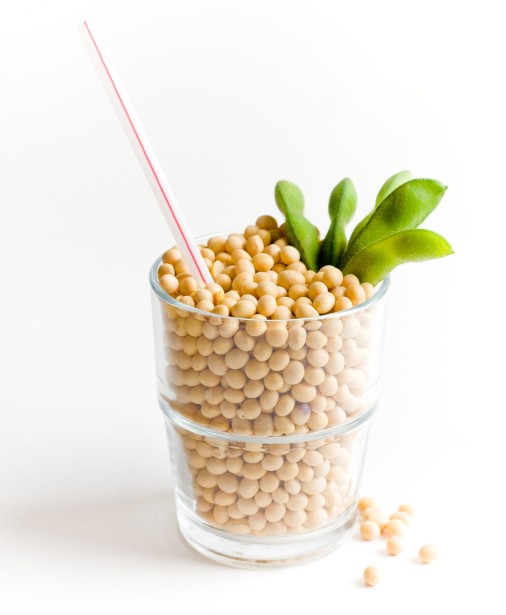
Not milk?

Navigating the non-dairy ‘milk’ aisle 26

soy milkHappy, happy, soy, soy?Photo: diane555In Checkout Line, Lou Bendrick cooks up answers to reader questions about how to green their food choices and other diet-related quandaries. Lettuce know what food worries keep you up at night.

Dear Lou,
I went to pick up some milk at our local mom-and-pop shop and noticed they had soy milk.  Since it seems a lot of our friends have switched to soy milk, I thought I would try some. Oh, the choices!  Not only were there three different organic soy milks, there were three rice milks and two hemp milks! Totally confused, I stuck with the organic milk from cows that I usually drink.

But this led me to wonder: what are the differences, nutritionally and sustainability-wise, in case I want to try a plant-based milk?

Thanks,
Lactose Intrigued…


Dear Lactose Intrigued …
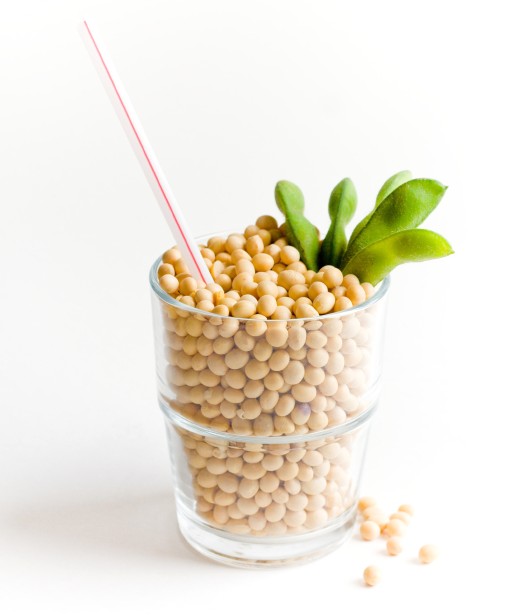
Not only are the choices intriguing, but how about the marketing nomenclature that brings to mind vegetables with mammaries?

Am I alone in this? (Don’t answer.)

I empathize with you about the dizzying choices. I can’t believe it has come to this, but I am going to give you a few tips about navigating the alternative milk shelf. (Note to self: It may be time to buy a place in the country where I can live a simpler life. So long as I don’t have to buy milk there.)

Here are the tips:

• Get a reliable guidebook. (Gotcha! Just testing to see if you were truly awake after that tall soy chai tea latté.)

• OK (make serious face, clear throat): Although I can’t talk at length about the nutritional differences in plant milks (because that’s not my gig), I will say this: If you have health considerations, consult your doctor. Plant milks may be lactose-free, but each has its nutritional ups and downs and some perils lurk: rice milk is high in carbs, almond milk won’t work for those with nut allergies and the pros and cons of soy are controversial and mixed, to say the least. Also, read the labels carefully, bearing in mind that plants milks are processed foods. Keep an eye on sweeteners, additives, etc. On the upside, most of these milks are vitamin-enriched.

• Bear in mind taste (see below), because, let’s face it—if you think it’s yucky, the fact that it’s good for you or the planet is not going to matter. On that note, don’t expect milk. It’s sort of a shame that these juices are called milks because beyond their opaque color, they’re more juice-like than milk-like, and that can be a shock to the taste buds for a PMV (“plant milk virgin”—just remember, you heard that phrase here first).

• Milk alternatives can be pricey, and they come with difficult (or impossible)-to-recycle packaging and a carbon footprint produced by all that processing and long-haul travel. So if you like the stuff, consider making your own if you have the time. Surf the net for recipes for recipes such as this one.

Now let’s take a look at the alternatives you mentioned. I enlisted the help of my captive friends expert panel to do a little taste test. Although all of these milks come in sweetened, flavored forms (chocolate, vanilla, etc.), I stuck to unsweetened, unflavored versions so that we might experience the terroir of plant milks (that place in the country is looking better and better).

Soy milk
Environmental considerations: Not only is soy a high-spray, intensively-farmed crop, but most of the US crop is also genetically modified. Soy is so popular world-wide (it’s used as food for humans and livestock, and for making biofuels) that vast chunks of the Amazon rainforest  are being cut down to grow soy, thus wrecking habitats and indigenous people’s lives and so forth. 

Taste & appearance: Beige color; decent texture. In general the taste is sour. “Pure nastiness,” was the response from one tester, who, ironically does not consume any dairy. Another tested said, “spoiled.” Confession: I adore Silk chocolate soymilk, which is not surprising considering that I will adore pretty much any product that lists its second ingredient as “evaporated cane juice” and cocoa as its third.

Tip: Buy American-grown, identity-preserved USDA organic soymilk. If you want to find the organic American behind your soymilk, check out Find your Farmer function on the Organic Valley site. If you’re going to buy products using imported soybeans and you’re concerned about, oh, say, the fact that the Amazon rainforest produces about 20 percent of the earth’s oxygen, consider doing a little homework (grab those reading glasses). Lorenda Raiol, The Nature Conservancy’s Amazon resource information officer, says that you should find out where your soy comes from because in 2006 the Brazilian Association of Vegetable Oil Industries (ABIOVE) and the National Association of Cereal Exporters (ANEC) signed a “Soy Moratorium,” in which they committed to not buy soy from areas that were deforested in the Amazon biome after that date. “So, find out what companies are part of ABIOVE and ANEC, and reading the small letters on the labels is way to good start.”  My two cents: Call companies or go to their websites for more information.

Rice milk
Environmental considerations: Rice, one of the most widely planted cereal crops worldwide, is intensively farmed, and  it goes without saying that rice needs lots of water because it is grown in flooded paddies, which are sometimes contaminated with arsenic. The good news: New varieties of rice may make rice farming less intensive. The bad news: Some of these varieties are genetically modified (GM) and many countries around the world believe that GM foods are unsafe. A few years ago, the US provoked international ire by allowing some of our GMO rice to escape our borders.

Taste & appearance: Naturally sweet; watery texture. “Not bad,” said one taster. Another said, “Works with cereal.” I reach for it when I’m out of milk but I’d rather pound nails with my forehead than put it into my coffee.

Tip: Buy USDA organic. My husband and kids put organic Rice Dream on their cereal (read the label: not all Rice Dream is organic).

Hemp milk
Environmental considerations: According to Anndrea Hermann, an agronomist and board member of the Canadian Hemp Trade Alliance, hemp is a hardy, fast-growing crop that naturally suppresses weeds (because of its tall “canopy”) that resists many diseases and does not need lots of watering (big taproot). In other words, it doesn’t require intensive farming. Note: Organic hemp milk is available, but if the product isn’t organic bear in mind that the hemp in foods currently on American shelves comes from Canada, where it’s illegal to spray hemp crops that are used for food (conventional fertilizers may still be used).  Go here to watch adorable Canadian farmers talk about hemp crops. Oh, Canada!

Taste & appearance: Putty colored and ever so slightly grainy. One taster described it as “chalky” and “not right at all.” I found it to be vegetal and slightly sour, but less so than soymilk. I like the taste of hemp seeds a lot more than the taste of hemp milk.

Tip: It will not cause you to giggle endlessly, inhale cold pizza, or fail a drug test. While it’s true that hemp foods come from the same plant that produces pot, hemp food plants are bred and processed in a way that renders their THC content negligible. The public misperception that hemp foods will get you high is rapidly fading, Hermann told me. “It would be like people worrying about their poppy seed muffins.”

Now, dear reader, I need to break it to you gently that the next time you venture beyond your mom-and-pop grocery store (if you must), you are likely to encounter an array of vegetable excretions that includes not only the above milks, but oat milk, almond and other nut milks, and coconut milk, which has been given a glamorous makeover from its old pina colada days. 

According to Perry Abbenante, global grocery coordinator for Whole Foods Markets, coconut milk is turning up in non-dairy yogurt-style products, frozen non-dairy desserts, and non-dairy beverages. “It’s still in its infancy, but is definitely catching on.”

Are you perhaps wondering if coconut cultivation is ruining the planet like its evil cousin oil palm? Let’s save that for another column.

In the meantime, if you choose to stick with cow’s milk, keep buying organic. But if you ever get the chance, get milk that’s both organic and local. That’s a decision you don’t need a tasting panel to help with.

Your friend in food matters,
Lou

Lou Bendrick is a former contributor to the High Country News Writers on the Range syndication service whose freelance work now appears in various publications.

Advertisement
Advertisement
  1. CharlieB Posted 9:53 am
    24 Apr 2009

    i didn't like any of the soy milk and the way it tasted. then again i don't like real milk either.
  2. Gar Lipow's avatar

    Gar Lipow Posted 12:20 pm
    24 Apr 2009

    I'm a bit grumpy about your reply. Because you are ignoring  the context of the question in your reply. When you talk about the damage done by growing soy and rice and so on you ignore the COMPARISON between vegatable milks and cow milk. For example, if you compare on a gram of protein for gram of protein basis, soy milk has around one fourth of the impact of cow milk. If compare on the basis of global warming impact, soy milk comes out even further head - one fifth or less.
    Some of your other points on packaging: I don't know about you, but when I see cow milk in supermarkets, it is also in packages. And my local town (Olympia, WA) accepts just about all the containers soy milk comes in for recycling.Incidentally, the single greatest use soybeans are put to is still animal feed. 
  3. vanillalime Posted 4:33 pm
    24 Apr 2009

    I would seriously NOT buy soy milk.Each year,millions of acres of rainforest are burned to grow soy!SICK!
    1. Gar Lipow's avatar

      Gar Lipow Posted 11:42 pm
      24 Apr 2009

      And most of that is fed to animals, and most of the rest is fed to cars!  The U.S. grows enough soy to provide soy milk to replace every drop of milk  U.S. adults drink with plenty left over! If you drink cows milk the odds are that that ratio of soybeans eaten to milk produced is greater than the number of soybeans needed to produce the same amount of soy milk!
      Here are some old 1997 figures on percent of U.S. soy harvest fed to dairy cows.http://www.livestocktrail.uiuc.edu/dairynet/paperDisplay.cfm?ContentID=327
      I am not taking time tonight to dig up later figures, but the big difference you will find today is that more of the soy harvest is used to make biodiesel.  So if the effect the soy harvest on the rainforest makes you sick, then the effect of drinking cow milk should make you sicker, because it leads to consuming more soybeans.
      Here is the bottom line. There are ways of raising cattle that are easier on the environment that don't involve feeding them other animals or soybeans or things they really are not designed to eat. But there are ways of growing soybeans that don't involve burning down rainforests either. And in the latter cases, the answer lies in consuming the soybeans directly rather than feeding their high quality protein to animals.
    2. lostsailor87's avatar

      lostsailor87 Posted 8:08 am
      25 Apr 2009

      "I would seriously NOT buy soy milk.Each year,millions of acres of rainforest are burned to grow soy!SICK"-And I bet you eat meat too. This article was not based in fact but rather in opinion. EDUCATE YOURSELF! (including the guy who wrote this article. he is obviously a meat/dairy-eater and very biased). dairy farms are bad. bad to the animals, bad for the environment, bad for your health (do you know how much PUS is in cow milk??) etc. etc. I urge everyone to please wake up and learn about the all around great benefits to a vegan diet. Back to your comment, vanillalime: way more "rainforests are burned" thanks to the huge amount of land needed for grazing and growing animal feed. Get your facts straight.
      1. CowsEatGrass's avatar

        CowsEatGrass Posted 7:16 am
        28 Apr 2009

        It is unfortunate that a reply demanding education before prolamation suffers from that very same fault."Dairy farms are bad. bad to the animals, bad for the environment, bad
        for your health (do you know how much PUS is in cow milk??) etc. etc."This is unsubstaintiated at best.I'm with you that if you put "some" in front of dairy farms you're right on target.  But that would require actually going to one (or more!) dairy farms to find out for yourself.  A website that is set up against dairy is no less "biased" than you accuse the author of this post to be.
        Please, seek out first-hand information about farming practices for all of your food--that is from real people on real farms--before you publicly demonize their way of life.  You just might be surprised. 
  4. gullyfourmyle's avatar

    gullyfourmyle Posted 11:08 am
    27 Apr 2009

    LOSTSAILOR87 saved the day. I was going to go on a rant about cow's milk and soy but he (or she?) saved me the bother.

    Cow's milk does not belong inside anyone at any age.

    Go to the notmilkman.com site if you need more convincing. There you will learn all you need to know about what a disaster cows milk has become in every way.


    Soy milk is not a good idea if you are diabetic or if you have candidiasis.


    Rice is very constipating so if you are making a habit of drinking rice milk and not eating enough natural fiber - not dead fiber supplements, then you are on course to give yourself chronic constipation which leads to all sorts of dietary cancer and many other forms of degenerative conditions.


    Almond milk is great on cereal but you can't eat it on a regular basis without damaging your thyroid. Even in milk form,almonds are still nuts and require substantial input from your thyroid to process. Eventually, your thyroid can't keep up. That's when you get heart palpitations. If you keep it up, they get worse until you are finally diagnosed with a thyroid condition. Then, unless your doctor correctly figures out what you did to yourself, you are on a steep slope into very poor health.


    The very best beverage is clean water. It is highly underrated, it can be boring but without it in sufficient quantities, you are soon in trouble.

    Drinking water as tea or coffee is not drinking water.

    What your body uses water for besides lubrication and transportation of nutrients is to help your body at the cellular level flush out toxins. Nothing works better than water for that.
  5. sherrieh's avatar

    sherrieh Posted 12:37 pm
    27 Apr 2009

    For what it's worth, I googled "almond milk thyroid" (without quotes), and most of the results referred to soy milk as problematic for the thyroid, many counselled almond milk as an alternative to soy, and none linked almond milk to thyroid problems.  I'm curious how it measures up environmentally against the other not-milks mentioned in the article.
  6. spaceshaper's avatar

    spaceshaper Posted 4:41 pm
    27 Apr 2009

    Sounds like the old 'paper or plastic?' debate. Both plant and non-human animal milks are environmentally problematic (coconut milk may be the exception - if you live where coconut palms are plentiful), and are quite unnecessary for human well-being. Unless you're under two or three years old, why drink any kind of 'milk' at all?
  7. lostsailor87's avatar

    lostsailor87 Posted 5:26 am
    28 Apr 2009

    Thank you Gullyfourmyle!! That was my shortened rant. I could have gone on for days. I am glad you agree that cow milk is bad for you! I think the website you are referring to is actually notmilk.com. It's a great site with a lot of information. Of course there are benefits and detriments to every kind of milk, just like there are with most foods, but it's about making the right choice for yourself (and I can assure you cow milk is never the right choice) and always enjoying in moderation. And of course, drink more water!!P.S. I am a female, but this is my boyfriend's user name. So any other comments on this sight under this name are his. I just couldn't resist myself with this one.Oh, and anyone who knows where the name "lostsailor" comes from gets extra points ;)
  8. lostsailor87's avatar

    lostsailor87 Posted 9:36 am
    28 Apr 2009

    I am sorry cowseatgrass, should I have cited my sources? And who are you to say what I have experienced? There probably are some dairy farms out there that treat their animals well, but I'm sure they are very few and far between. The reason MOST dairy farmers treat their animals so poorly is to meet demand. A cow's body does not naturally produce as much milk that is needed to supply our thirsty selves.I assume you are talking about notmilk.com? The website states facts, not just someone's biased opinions. Did you actually read some of the links on there? Keep in mind this is not the only research I've read about the matter. I was only agreeing with Gullyfourmyle."Please, seek out first-hand information about farming practices for all of your food--that is from real people on real farms--before you publicly demonize their way of life. You just might be surprised."Thanks for the advice, but I don't need it. I buy all my fruit and vegetables at a local farm stand. I obviously do not consume dairy or meat products. I make whatever I can at home and avoid processed foods.Finally, since you are so versed on "farming practices" I'd love for you to share the names and locations of some "good" dairy farms with me.

    Thanks.
    1. CowsEatGrass's avatar

      CowsEatGrass Posted 10:25 am
      28 Apr 2009

      Wow, sorry, I guess.  I shouldn't have offended your obviously right position on this.In the spirit of furthering the dialogue, I'll attempt to separate out legitimate questions from needlessly pointed commentary.I think it is incorrect to say that most dairy farmers treat their animals poorly.  Perhaps the cows that most of the commercial conventional milk comes from are treated terribly, but that is a very different thing than accusing diary farmers as a whole.  The problem is that, in terms of numbers of farmers, many if not most do the right thing.  They have herds of less than 50 cows (many closer to 20), these cows graze on pasture, outside, during the months where that is an option, and are cared for far better than most pets (remember, these animals are their livelihood).  Huge dairies with thousands of cows are a completely different story, and while they supply the majority of the milk, they are by no means the majority of dairy farms. Period.Just like you would not buy your produce from a grower whose practices you didn't agree with, I would propose the same approach for milk.  Just because someone out these grows their lettuce with terrible labor practices, toxic chemicals, and an eye only on the bottom line doesn't mean you choose to eat no lettuce at all, right?You'll hear no disagreement from me that cows on farms produce much more milk than they would "naturally" (whatever that is for a dairy cow), but it is just as easy to see that as a function of their overall health and the care that is given to them as it is to see it as evil prodding with hormones and antibiotics (of course, that happens too).I would be hard-pressed to provide the names and addresses of acquaintances in a public forum such as this and would also hesitate to send grumpy vegans out to visit them (sorry, had to do it...).  My personal experience is mostly with small-scale Amish dairy farms selling their milk to Organic Valley and producers of both goat and cow milk working to find ways to legally sell raw milk for human consumption.  There are a bunch of resources out there to find producers in your area.  Try Local Harvest or this page: http://www.realmilk.com/where.html (note that I don't necessarily endose everything on the site, despite it being a useful resource. Since we're way off topic: I'll add that almond milk is my favorite non-dairy alternative. 
      1. PermieWriter's avatar

        PermieWriter Posted 10:43 am
        30 Apr 2009

        A good general guide for well-grown foods, including dairy, is eatwellguide.org. From personal experience, the dairies I'm most comfortable with are Straus in Marin and Clover in Sonoma County.
      2. StellaBlue's avatar

        StellaBlue Posted 4:06 am
        01 May 2009

        Note: I was typing on LOSTSAILOR before, it was time to make my own name.Cowseatgrass, there is not much I really feel like saying to you anymore. First of all I was never offended, only defending my points. Don't try to make yourself sound so righteous please. I will continue to say most dairy farms no matter what you claim. Sorry. You said:"Just because someone out these grows their lettuce with terrible labor practices, toxic chemicals, and an eye only on the bottom line doesn't mean you choose to eat no lettuce at all, right?"This just makes me think that you are not really getting it. Yes, chemicals, blah, blah, blah, need I repeat myself about how I get my vegetables? And even that is only until I can live in a house where I can grow them myself. But the main reason I don't feel as strongly about my vegetables is because they do not have a central nervous system! They are not animals! They do not feel what the farmer does to them! The reason I am a vegan is because of animal cruelty (yes, that includes d-a-i-r-y farms).Alright, (change of tone) that out of the way, I am glad that you are conscious about where your milk comes from. You seem to know what you are talking about, but we will always disagree. That's that. I was not asking for the names of your personal friends that have a farm down the street, I was thinking just "Blank Farms" or something along those lines. But nevermind. And call me names all you want, but the point was never actually going to visit these farms and buy their milk (I will never drink cow's milk, remember?) it was just so I could know that what you speak of actually does exist.You're right, we are off topic. On a positive note, I am looking forward to try some of the different brands and varieties suggested in some comments here.  
  9. canadianfoodiegirl Posted 11:44 am
    28 Apr 2009

    I registered for the website just to comment here:Soy is questionable for a lot of reasons, but my opinion, after a lot of research into the dangers of it, is that in moderation it can be tolerated by most people. Those with thyroid conditions should avoid it. In my opinion, unsweetened soy milk tastes horrible and regular soy milk is an acquired taste. It curdles in hot beverages, though I don't remember which milk alternatives don't. Not all brands of hemp milk tastes the same and some are better than others.In terms of nutrition:Almond milk is high in protein. Almonds are rich in magnesium,
    potassium, manganese, copper, vitamin E and
    selenium, and calcium. Hemp milk is high in essential fatty acids and other nutrients. Rice milk is mostly carbohydrate.Most have added vitamins and minerals but some have additives that you wouldn't expect such as sunflower oil so it's always worth reading ingredients in milk alternatives. Added oil is common in rice milk. Personally, I prefer my rice milks without oil so I shop accordingly and buy an oil-free brown rice milk.It's stupidly easy to make your own almond milk at home and only requires the purchase of nuts. Here's my recipe. Many variations are available online if you seach for "almond milk recipe". I made this one this morning before work. Took 15 minutes.Almond milk:Soak almonds overnight.Drain and rinse.Combine 1 part almonds to 2 parts water (eg 1 cup almonds, 2 cups water) in a blender and blend until smooth.*  You can add some natural sweetener here if you want or leave it unsweetened. Most recipes recommend blending with 2-3 pitted dates but you can use a bit of sugar, stevia, agave nectar, honey or something else. I've used agave nectar that was flavoured with hazelnut.
    Either place a sieve over a bowl, pour the almond mixture over and mush it through with a spoon orLine the sieve with cheesecloth, pour the almond mixture into the cheesecloth and wring it out into a bowl. You can also squeeze it through your hands rather than cheesecloth.
    I take the pulp and re-blend it with more water until I've gotten as much as I can out of it.
    *Some recipes call for more water than that.Other notes:As I'm new to this, I haven't found a use for the pulp yet but I've
    read recommendations of putting it on cereals or using it for meatless
    burgers. I'll likely throw it into the organic waste for compost.You can roast your almonds first.Making almond milk yourself is cheaper than buying it. However, when you make it yourself there's no added vitamins or minerals which may be a pro or a con, depending on your perspective.
    1. Avelhingst Posted 2:39 pm
      28 Apr 2009

      Just something I've run across - my ladyfriend cannot consume carbs without balancing them with proteins at the same time, and for her almond milk is RIGHT OUT - 1gram protein or something similar (I am quoting her on this).  However, an almond milk smoothy with 1 non-local mango and a heap of dairy whey (eww, sick, w/ev) is MIGHTY tasty. 
  10. racje Posted 11:59 am
    28 Apr 2009

     Nutritional reasons for drinking milk: calcium, protein.  Soy milk, rice milk, help milk, almond milk are naturally low in calcium; calcium is added to many commercial brands, but if you make your own you won't be getting calcium. You can get calcium from greens, or from pills--no need to drink any white liquids.  Only soy milk and cow's milk have significant amounts of protein. You can get protein from many other sources. Again, no "milk" of any sort is necessary.

    It's just about wanting something white and familiar in the chai or on the cereal.  Now, does anybody have a recipe for cultured blue soy cheese? I miss blue cheese.
     
  11. kateamon Posted 3:04 pm
    28 Apr 2009

    From my research on milk as a consumer, here's my 2 cents about which ones I'd trust to buy:
    Cow Milk: Organic Valley.   NEVER Horizon or Silk (owned by Dean Foods, hisssss)Soy Milk: Eden - unsweetened vanilla is my favorite. Organic, whole US grown soybeans are used.Sometimes for variety I'll buy an almond milk, or Living Harvest's Hempmilk. But I keep in mind there's added sugar (organic cane, but still it's sugar) in those.You can learn about who owns which organic brands, and which are still truly independently owned at the Cornucopia Institute's website, http://www.cornucopia.org/I keep the idea of making my own non-dairy soy or almond milk in mind to try sometime. That or breadmaking :)
  12. Missouri Mama Posted 7:08 am
    29 Apr 2009

    If you are going to drink soy milk go for the non GMO type...men should stay away from soy it is estrogen producing and if women use a lot of it it may cause them to be estrogen dominant, which can cause health problems...raw milk (if you can find it) is great if you are a milk drinker...no antibiotics & hormones added...goat's milk is one of the most digestible milk's for humans to consume...preferably raw and is great for people that have a hard time processing protein...especially the whey...hemp milk seems to be o.k. but, I think it's pretty yucky...rice milk is a great alternative for those without sugar problems...it's higher on the glycemic index...almonds are made for squirrels...so use sparingly...make sure that you read the labels and stay away from canola oil & carrageenan as they are toxic.
  13. plumblossom Posted 9:36 am
    30 Apr 2009

    WALNUT MILK!I am very cautious about any 'milk' either because they are probably contaminated, genetically modified, or gross. That is why I came up with a recipe for Walnut Milk, which is an awesome substiute. Below is the recipe, and you can read the entire link, including some info on why it's good for you on my recipe blog.Here are the ingredients:
    2 cups raw walnuts
    6-8 cups hot water
    Vanilla, sugar, honey, stevia, etc to taste

    Start
    by putting the walnuts in a blender and covering the walnuts with hot
    (almost boiling water and letting them sit for about 3-5 minutes. This
    will help loosen the bitter skin that covers their flesh, and if you're
    not buying organic, it's a good way to get rid of some of the junk they
    spray on them. Trust me. Do not skip this step, and do not try the brown liquid that you are about to pour off of it. It's vile!

    Once
    you've done this, fill the blender with the remaining hot water, and
    blend for two minutes. Let the mixture sit for 5-10 minutes, blend once
    more with your flavor enhancers (if you chose to use them: it's pretty
    tasty without!), and then sieve it twice: once through a larger sieve,
    then through a smaller one. You can also run it through a coffee filter
    or tea sock to get rid of every last bit of grit.
  14. vanillalime Posted 4:23 pm
    30 Apr 2009

    Guess what, "lostsailor" there are better sources of protein (in a vegan diet)than soy.-i should know,i AM one.Who the h*ll are you to say whether i eat meat or not!?  I believe that "Navigating the non-dairy milk aisle" is a very informative article-based on FACT-not opinion.Thanks, Lou .
    1. StellaBlue's avatar

      StellaBlue Posted 3:42 am
      01 May 2009

      *Hi. I am the same person that was typing on LOSTSAILOR. That was my boyfriend's name, I decided it was time to make my own.*Vanillalime, I never said anything about protein. If you want to talk about it I will say, the good thing about soy protein is that it is a complete protein, meaning it contains essential amino acids as well as protein. I realize a lot of foods have protein (nuts, seeds, legumes, whole grains), but they are not complete proteins like soy. I am not saying you have to go out and buy soy milk (tofu anyone?), I am just saying that if you are concerned about the environment and rain forests, you are mistaken for thinking soy (of all things!!!) is what is destroying the most land. But I already talked about that.Anyway, you say you are a vegan. Congratulations. (I say that sincerely). I shouldn't have jumped to conclusions saying that you weren't, but let's face it, your first post made no sense. If you are a vegan and don't eat any soy I am wondering, however, what you do eat. And what your motives are. You don't have to answer those questions if you don't feel comfortable.Lastly, I am sorry but you will not change my feelings about this article. I re-read it after I read your post, and it angered me even more than it did the first time. I guess we will have to agree to disagree on that one.
  15. spaceshaper's avatar

    spaceshaper Posted 6:35 am
    01 May 2009

    Thing I still don't get after all this increasingly bizarre discussion is if you have reasons not to drink milk (ethics, lactose intolerance, w/e) why not just - not drink milk? What is the atavistic compulsion which will drive someone to consume a somewhat expensive and highly processed whitish liquid which apparently doesn't taste the same OR have the same nutritional value as the original and has its own set of ethical, environmental and dietary problems?Guess I just don't get it. Last time I drank a glass of milk I was seven years old. I was in hospital having fallen out of a tree and broken my arm. Nurse insisted that the milk would make my arm heal (it did - causation or correlation?) So fifty milkless years later and my bone health is apparently excellent. Milk is for babies, milk substitutes are for the gullible and deranged.Full disclosure: I do enjoy good quality cheese, butter and yoghurt in modest quantities. I'm a sucker for ice cream too but ration myself because of the sugar content. I've lived around dairy farms much of my life and am aware of the discomfort that dairy cows in even the best-run operations have to put up with as well as the hell they endure in the worst of the worst. I've not entirely made my peace with that but you'll never find me going to the ersatz and the phony as a way out.
  16. StellaBlue's avatar

    StellaBlue Posted 2:54 pm
    02 May 2009

    Spaceshaper-I'll make this short and sweet. I use soy milk for baking, not necessarily for just drinking. (I use an egg sub. too, gasp!)Your arm was going to heal anyway.I do not consider myself to be "deranged" or "gullible." I agree that we do not need cow's milk, so it doesn't surprise me that your bone health is good without it. But deranged? really? How about..."milk substitutes are for the vegans who like to bake and sometimes enjoy blueberry pancakes on saturday morning."Thanks for joining the "bizarre discussion."
  17. spaceshaper's avatar

    spaceshaper Posted 4:05 pm
    02 May 2009

    Stellablue, sincere apologies for any offense to you and other milk substitute users. I've been feeling bad about the 'gullible and deranged' comment ever since I posted. I confess to a long-held general antipathy to all the faux foods but I am open to the possibility that I might develop a different perspective on certain of them, including the milk substitutes, if I became a vegan. And yes I do know my arm would have healed just fine without the milk. Enjoy your pancakes.
  18. StellaBlue's avatar

    StellaBlue Posted 7:13 am
    03 May 2009

    Apology accepted. Overall, I'm just really happy someone else finally understand that we do not need cow's milk! (After infancy of course). I like that you are open minded to change your perspective.

    Alicia

Add a Comment

You are not logged in. Thus, you cannot post a comment. If you have an account, log in. If you don't have an account, well, by all means go make one! Meet you back here in five.

Hello, Visitor!    Why not register?

Advertisement