Fishing for trouble

Bittman takes a bite out of the ocean 20

Red snapper

Endangered species for sale

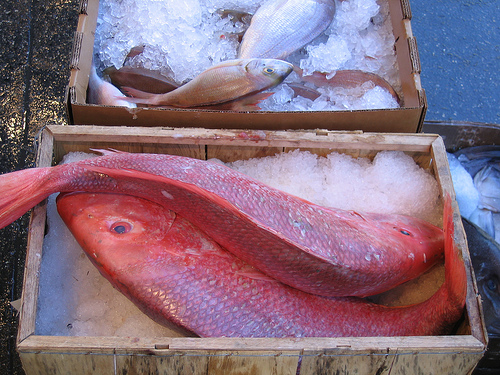
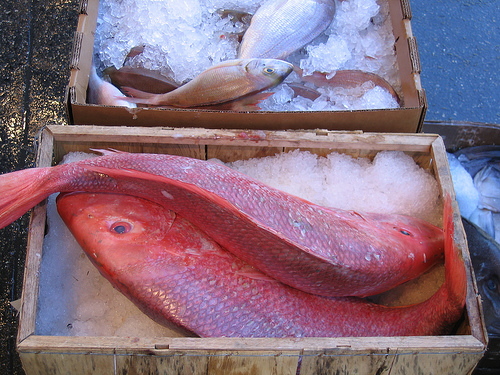
Photo: MaRonin47

I’m a big fan of Mark Bittman. I’ve been reading him since his Cook’s Illustrated days in the early ‘90s; I consider his weekly “Minimalist” column in The New York Times invaluable; and several of his cookbooks sit, stained and dogeared, on my shelf. Bittman made a career by slicing through pretensions about cooking as an art best left to professionals or the leisure class. Long before it became fashionable, Bittman demonstrated that cooking from scratch can be a quotidian activity. All it takes, he has preached again and again, is a few decent ingredients, some basic kitchen equipment, and some quite learnable skills and principles. (Here’s a classic Bittman piece on how to outfit a high-functioning home kitchen without blowing $500 on a single pan.) The importance of such thinking is immense. Farmers markets, CSAs, and other sustainable-food institutions could not have arisen over the past two decades without a growing horde of people who feel empowered to cook. The farm-to-plate trend might have peaked long ago, if people felt that cooking meant 20-ingredient, epic recipes that required the use of $150 chef’s knives. Bittman has been an important figure in debunking that myth—and done so without nudging people to rely on packaged, processed foods in their cooking, as certain TV cooking-show stars have. 

Further, I salute Bittman’s recent critiques of the industrial food system, summed up in his book Food Matters: A Guide to Conscious Eating.

For all of these reasons, it pains me to call him out on something in his recent Minimalist column, which features a delicious-sounding recipe for fruit salsa with red snapper—one of the most endangered species in U.S. waters. I know I sound like a former smoker now spewing hellfire and damnation at the unsaved. (My conversion moment was reading Teras Grescoe’s Bottomfeeder.) But I believe that influental food writers, especially ones concerned with conscious eating, need to start educating the public about the dismal state of the oceans.

A couple of weeks ago, I chided Bittman’s colleague, NYT culture editor and sometime food writer Sam Sifton, for something similar. But even though Sifton published a recipe calling for endangered fish, he at least made distinctions. Sifton explicitly went looking for “fresh” fish caught “out in the cold waters off Montauk.” There’s an implicit message here: buy what’s in season from your local fishermen—a generally much more sustainable way to go about things than buying what turns up at the supermarket from industrial fisheries. Of course, lots of folks in the U.S. don’t live near the sea or have access to local fishermen—hence my ire at Sifton for not raising sustainability issues.

Bittman, however, makes no distinctions about snapper. According to the National Marine Fisheries Service, the red snapper fishery streches from North Carolina, around the Florida coast, and all the way down the Gulf of Mexico. They can live upwards of 50 years. Here’s the bad news: the breeding population of red snapper stands at 6 percent of target size in the Gulf, and 3 percent off the Atlantic coast of southern states. In other words, if present trends continue, we could be the last generation that gets to eat this admittedly delicious fish.
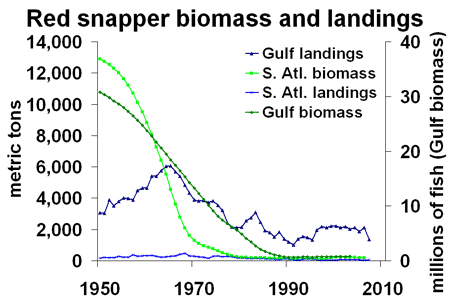
snapper chart

Collapse of a fishery

Source: National Marine Fisheries Service

Bittman calls for red snapper in his recipe without comment. In the accompanying article, he makes this remark: “I have served xec [a Mayan fruit] with poached shrimp, sautéed skate, grilled swordfish and roast tuna. They were all terrific.”

And all problematic. Take shrimp—once a seasonal treat, now everyday fare for Americans. A few years ago, shrimp surpassed canned tuna as the most-consumed U.S. seafood product. “Today, 90 percent of our shrimp—more than 1 billion pounds a year—come from foreign farms,” writes Jim Carrier in an excellent recent piece in Orion. In Bottomfeeder, Teras Grescoe puts it like this: “The simple fact is, if you’re eating cheap shrimp today, it almost certainly comes from a turbid, pesticide- and antibiotic-filled, virus-laden pond in the tropical climes of one of the world’s poorest nations.” Lest anyone think otherwise, these factory farms contribute to poverty in the nations that house them, as Grescoe demonstrates; they privatize and cut down highly productive mangrove forests that once sustained fishing communities, leaving fetid dead zones in their wake.

Skate? Don’t go there. Here is Monterey Bay Aquarium’s Seafood Watch:

Skates have been severely overfished and most are caught with bottom trawls, which result in high levels of accidental catch and substantial damage to the seafloor.

Swordfish can be a good choice, according to Monterey Bay, but people should be aware that it’s a top feeder that bioaccumulates alarming amounts of mercury.

As for tuna, most species (excluding bluefin) are okay to eat in terms of sustainability, but, like swordfish, tuna tends to carry a heavy mercury load. (Environmental Defense has a list of fish to watch out for in terms of mercury and PCBs).

My point is: at this point, societies need to make serious decisions about what seafood is consumed and how we farm it. If we don’t, we risk losing the sea as a vital food resource. Influential food writers can’t force the issue themselves—ultimately, we’ll need coordinated government action across the globe—but they have considerable power to point consumers in the right direction The time has come to use it.

Doing so needn’t mean turning every article on seafood into a lecture on fishery trouble. Seafood Watch offers a robust resource for making sound distinctions when cosndering which fish to buy—including alternatives to red snapper.
 

Grist food editor Tom Philpott farms and cooks at Maverick Farms, a sustainable-agriculture nonprofit and small farm in the Blue Ridge Mountains of North Carolina. Follow my Twitter feed; contact me at tphilpott[at]grist[dot]org.

Advertisement
Advertisement
  1. Erik Hoffner's avatar

    Erik Hoffner Posted 12:11 pm
    08 Apr 2009

    You're right, promoting mass consumption of red snapper isn't cool. It's way overfished nearly everywhere it exists.However, there are places in the Gulf where snapper is plentiful, b/c you're not allowed to catch any. A friend in Pensacola told me recently that he has to throw back many nice red snapper every time he fishes a certain wreck out there.And at least that sounds like good news.
  2. amazingdrx Posted 8:02 pm
    08 Apr 2009

    yeah Eric good news! maybe if industrial factory fishing were curtailed fish populations would return? It's worth a try. How about if greenpeace rates the various fish products available, from mcdonald's to the local fish market? It might direct a boycott of industrial fishing? Food that tastes good but kills life in the ocean in the process, ought not create joy. But rather disgust. twitter: @amazingdrx  blog
  3. PermieWriter's avatar

    PermieWriter Posted 8:51 pm
    08 Apr 2009

    I don't suppose that pointing out that red snapper is a catch-all term for bottom-dwelling rockfish that could be as old as your grandpa might cool folks' appetites for this admittedly tasty fish?
  4. Mark Bittman Posted 8:17 am
    09 Apr 2009

    In short, this was a screw-up, and for that I apologize, and thankful for the wake-up call. I'm (obviously, in general, I hope) committed to sustainability, but these things will happen despite my intentions and efforts – it's a complicated situation, and I'm human.

    For those
    who are interested in more of my thinking on this subject:

    I do believe that there is a way in which we can achieve decent management systems and establish sustainable fisheries, and that's happening in isolated places throughout the world (as I noted in this piece in the Times a few months ago), but obviously that day is not here. Right now we have to be careful about what fish we chose, and in this piece I was not. (I thank Mr. Philpott for the gentle and even encouraging way in which he pointed this out.)

    Seafood Watch, however, is managed by scientists - not cooks. (I use it, I recommend it, I even like it, but it has very definite limits.) If you look at "best
    choices" column on their site much of the fish is farm-raised, and much of the remainder is impossible to find in the real world. (Imagine: "Is that cod Pacific line caught?" What would the fishmonger respond? If he even knew the answer, would he be likely to
    say "No, it's from the Atlantic, caught off Iceland by trawler?")

    In the recipe in question, the most viable alternative fish on that list – for my taste – is mackerel. Though I like mackerel, many people do not. Furthermore, it's sometimes high in mercury, so there, perhaps, is a reason it's not overfished, and a good reason not to recommend it. If I were to use that list as a guidepost to suggesting the best possible fish at every turn, there would be a rotor of omething like mackerel, sardines, herring, anchovies, squid (I do not either tuna or swordfish is sustainable at present, even though many people do) … and repeat.

    But if enough people were to heed that advice, even those fish might soon be in short supply. I remember the disappearance of redfish, orange roughy, haddock and cod of course, and every other fish which was in "abundant" supply 20 years ago. There is not enough fish to go around without good management practices. (Striped bass was "lucky" enough to be contaminated by PCBs, so there was a near-complete ban fishing for a while, or it would have been endangered or even extinct by now.)

    Equally important is the suggestion on the part of many that we choose farm-raised alternatives. But currently most of the aquaculture of fish and shrimp (not mollusks, however, in general) has nearly every disadvantage of industrially-raised chicken: it's cruel, it fouls the environment, it gobbles up resources better used elsewhere, it does not have as good a nutritional profile as the wild stuff (not that there is wild chicken, but there are wild birds), and, relatively speaking, it tastes lousy. I'd rather eat tofu than tilapia, and I practice that. I'm also trying not to use farmed fish in any recipe I write.

    None of this addresses my error; it merely reinforces that there is very little fish that is a) safe, b) worth eating, c) in currently adequate supply (which does not imply that that supply will be adequate a year from now).

    It's not simple. I write mainly about cooking. On the one hand I encourage people to cook at home, to use simple ingredients, to make conscious choices. On the other, I usually note – or try to - which choices are best from not only the flavor but the environmental perspective. Still, I no longer write "1 chicken, preferably free-range," because I hope that most readers have gotten that message or can figure that out without me. Nor do I feel it's up to me to tell people that there's mercury in tuna. Some responsibility for sustainability and health – general "goodness" - must rest with the individual.

    Again,this is not to excuse what happened in my column this week. I'm happy to be called out for that kind of sloppiness, I realize people take my words seriously, I'm glad they do, and I have to write as if that matters.

    Look for a bigger piece in the Times addressing these issues in the not-too-distant
    future.-Mark Bittman
    1. Erik Hoffner's avatar

      Erik Hoffner Posted 10:56 am
      09 Apr 2009

      Mark, and atlantic mackerel is also great smoked... - Erik
  5. PermieWriter's avatar

    PermieWriter Posted 8:40 am
    09 Apr 2009

    Thanks for the clarification. I hope you can develop a taste for tilapia. That and catfish are, I think, going to be the fish of the future, maybe the only fish our grandkids ever taste, if this goes on.
  6. Tim Fitzgerald Posted 10:05 am
    09 Apr 2009

    Thanks Tom and Mark for a great discussion. As a marine scientist, conservationist, and keeper of one of the sustainable seafood guides mentioned above (http://edf.org/seafood), I think we can all agree that this is a complex (and at times, confusing) issue. There were some points raised that I thought warranted some extra attention. First, in Tom's original piece:-Its true that red snapper has been overfished for years in most places. However, we're starting to see signs of recovery (both ecological and financial) in the Gulf of Mexico thanks to an innovative new management system called catch shares - http://twurl.nl/w5zei4-I can't say I agree with the assertion that most tuna species are OK to eat in terms of sustainability. In fact, the fishing pressure on most populations is so intense, that Seafood Watch rates many fisheries AVOID. http://twurl.nl/5arnvv-The notion that buying locally is a proxy for sustainability is problematic. Although I certainly agree that it makes sense from a culinary perspective, distance traveled has nothing to do with how the fish was originally caught or farmed. For example, if you live in coastal Massachusetts, then many of the species that you see in local markets (e.g. cod, haddock, flounder, skate, halibut) are from overfished populations.And in Mark's response:-There are several species of mackerel. Its true that some types - namely Spanish and king - are high in mercury. But a third type - Atlantic or Boston mackerel - gets high sustainability rankings, is low in mercury, high in omega-3s, AND amazingly inexpensive. Its the best of all worlds, especially if you like strongly-flavored fish.-Hopefully we've identified a more diverse array of eco-friendly options than just mackerel, sardines, herring, anchovies and squid. There are some great choices from Alaska like salmon, halibut, Pacific cod and sablefish. Then there's west coast albacore, coldwater shrimp, dungeness and stone crabs, U.S. mahimahi. I realize several of these items are regionally-specific, but I still think they're worth celebrating nonetheless.-I do share some of your opinions of farmed fish, especially given the egregious practices of most salmon and shrimp farms. However, we're not getting any more wild fish out of the ocean anytime soon, so we must be able to identify and promote better aquaculture practices. You pointed out farmed molluscs (e.g. clams, oysters, mussels) as good options. I'd add some fish - like char, striped bass, catfish - as well.-Finally I'd like to point out that, while we need to closely monitor fishing effort and fish populations, Best Choices on the seafood cards are often designated as such because they have precautionary measures in place to prevent them from being overharvested. That doesn't mean we can eat them out of existence, but we can feel good about choosing them in the first place.
    I think I've rambled on long enough. Again, thanks to you both for keeping the light on this issue.
  7. Linus_Cello Posted 12:23 pm
    09 Apr 2009

    One observation (made with some irony): In the same edition as this "Minimalist" article and lost amongst this discussion is an excellent article by Bittman's colleague, Melissa Clark titled "Seafood, Easy and Guilt-Free," that discusses many of the environmental issues raised.  Can't wait to try the Ale-steamed mussels with garlic and mustard.http://www.nytimes.com/2009/04/08/dining/08appe.html?_r=1&ref=dining 
  8. Tom Philpott's avatar

    Tom Philpott Posted 12:59 pm
    09 Apr 2009

    Thanks for writing, Tim. My impression that many species of tuna are okay came from the same link you drop above  -- Seafood Watch rates three tuna species "best choice" and four more "good alternatives," vs. four "avoid." Tuna is something you need a scorecard to keep straight, for sure. As for local being a proxy for sustainable, I share your wariness. A consumer can find similarly horrible stuff in a supermarket in coastal Mass. and one in land-locked Iowa. But in coastal areas, if you can find a way to access the catch of small-scale fishermen, it is my understanding that you stand a great chance of getting sustainably caught fish -- even of species (like Atlantic cod) that are horribly overfished by industrial players. My understanding comes in part from this analysis by Daniel Pauly of the Sea Around Us project, which shows, for example, that two-thirds of the catch of large-scale operations goes to "industrial uses" -- ie, fish meal and oil for CAFOs, fish farms, etc.; whereas virtually the entire catch of small operations goes to human consumption. The big guys also generate a tragically mammoth bycatch, where as small players utilize almost everything they catch. (For good meaure, small fisheries are also much more energy efficient.) In Bottomfeeder, Teras Grescoe quotes Daniel Pauly thusly: Small-scale fisheries should be supported "because of the scientific evidence available to confirm the commonsense inference that local fishers, if given privileged access, witll tend to avoid trashing their local stocks, while foreign fishers do not have such motivation." I'd be interested to hear your take on these issues.
  9. Mark A Powell Posted 1:01 pm
    09 Apr 2009

    Yes red snapper are in trouble, but what should we do about it?  Consider red snapper as a friend...if you have a friend in trouble, would you walk away or intervene?  Lovers of red snapper have options, and walking away is only one option.  Getting engaged in efforts to fix the problem is another good option, and it may be especially effective for fish like red snapper that are in high demand. How can you intervene?  Get involved with ocean conservation groups that are working to rebuild a healthy and sustainable red snapper fishery.  Here's one place you can start:  http://www.oceanconservancy.org/seafood
    1. spaceshaper's avatar

      spaceshaper Posted 4:55 am
      10 Apr 2009

      This kind of metaphor always confuses me. I don't generally eat my friends, nor even my casual acquaintances.
  10. Mark A Powell Posted 1:19 pm
    09 Apr 2009

    Tom,To the question of small-scale vs. industrial fisheries:  it's not the size of your boat that counts, it's what you do with it. Small-scale fisheries have done much harm, the cod fishery in New England was largely destroyed by individual owner/operator fishermen, sadly.  Nearshore fisheries in California sometimes operate from kayaks and cause depletion of the small coves that they fish.  Meanwhile, some larger-scale fisheries in Alaska (e.g. pollock) are certified as sustainable by the Marine Stewardship Council.Rules of thumb like "small is beautiful" can get you in trouble when dealing with fisheries.  Sustainability is not the province of the little guy, it's a way of working for people who are forward-looking, and that's not linked to the size of one's fishing gear. Many people, like Taras Grescoe, have sought a solution to the dilemma "what fish can I eat?"  Answers vary, and dispute exists as to the proper answer.  Perhap the solution lies in asking a different question--how can I help fix problem fisheries so I can continue to enjoy my favorite seafoods?The answer is not just to shrink the size of fishing gear. And, BTW, Taras Grescoe is my hero...almost.  Here's a blog post I wrote on "Taras Grescoe and the cult of no" that talks about his approach and yours Tom:  http://blogfishx.blogspot.com/2008/06/taras-grescoes-bottomfeeder-and-cult-of.html Mark Powell
    1. Tim Fitzgerald Posted 1:42 pm
      09 Apr 2009

      Good points, Mark and Tom. Regarding tuna - while there are several listings on MBA's green and yellow
      list, unfortunately most of the product in the market comes from the
      fisheries ranked red. Sad, I know.Going
      back to the red snapper example, we might also point out that more fish
      are taken by recreational fishers (numbering several million) than
      commercial boats (maybe 1000?). An individual rec fisher might not have
      a large impact on his/her own - and even use 'sustainable' fishing
      gears - yet collectively they have a significant impact on the
      population. This is just another illustration of how scale can be
      deceiving.
      Finally, the key word in Pauly's Bottomfeeder quote is 'access'.
      Nations without maritime sovereignty like the United States often
      fall victim to foreign fishing fleets (which as you rightly pointed
      out, have no incentive to conserve the resource). However, if you assign
      or dedicate access to that resource - either through individual quotas,
      fishing cooperatives, or area-based management, then you're effectively
      creating a steward which tends to act accordingly. This is what recently happened with Gulf red snapper and it's starting to pay dividends.
    2. spaceshaper's avatar

      spaceshaper Posted 5:34 am
      10 Apr 2009

      Size of the gear does matter, as well as the range of the boat, and small localized seafood markets are unquestionably less environmentally damaging than large global ones. A kayak may temporarily deplete a cove but but it takes organized industrialized fishing to eradicate a species. The north atlantic cod fishery provided high-quality protein to large populations for over six hundred years but it took only a few decades of efficient modern 'harvesting' techniques to destroy the cod population almost past the point of no return. The 'individual owner/operators' that helped deplete the cod fishery within the lifespan of a single generation were in hock up to their ears running big boats under contract to major processors like Gorton's. Sound familiar? It was just about the same as raising chickens for Tyson's or corn for ADM, and often just as unprofitable for the individuals and communities that got sucked into it.
      1. Tom Philpott's avatar

        Tom Philpott Posted 7:14 am
        10 Apr 2009

        Thanks for that important bit of context, spaceshaper. It's pretty undeniable, given meaningful access (as Tim emphasizes), that fihieries managed by small players are better kept than ones managed by giants. For an example of what happens when big players ruin a fishery, see Somalia, where big European fleets sucked al the fish out of coastal waters, destroying fishing communities and leading to social collapse and the rise of piracy.
  11. Mark A Powell Posted 1:26 pm
    09 Apr 2009

    duplicate comment removed
  12. Mark A Powell Posted 9:34 am
    10 Apr 2009

    There's a convenient ideology here, that "big industrial" fisheries are the cause of fishery problems. This neglects the history of decline which shows that, for example, cod depletion off Nova Scotia was evident in the 1850s--caused by dorymen in rowboats fishing with handlines. See http://hmapcoml.org/projects/gmcp/Scientific/What_is_the_history_of_the_Gulf_of_Maine_Cod_Fisheries.html

    The critiques of "big" boat fisheries are typically a self-serving narrative that defines "others" as the problem instead of oneself, with the definition of "big" adapted to suit the us/them narrative that elevates local underdogs into hero status. It also serves to create a simple framing that allows simple shortcuts in thinking through a decision like which fish to buy (buy the one from small fisheries). It's convenient, but wrong to say small-scale fisheries are inherently more sustainable because they're small-scale.

    A "big" boat in New England would be a "small" boat in Alaska. And a "big" boat in Mexico would be a "small" boat in New England. And so on. The size of "big" changes, but the narrative remains the same. Everything was fine in my fishery until those darn "big" boats moved in and destroyed everything.

    The Steller's sea cow and great auk were both driven to extinction centuries ago by small-scale over exploitation. Like the handline fishing that depleted cod off Nova Scotia in the 1850s, defining these problems as being caused by "industrial" exploitation by "big" operations would be defying common sense to defend the ideology that small is beautiful in fisheries.

    What's needed instead is analysis of the sustainability of fisheries and solutions tailored to the problems, not "small is beautiful" ideology masquerading as analysis.
  13. Mark A Powell Posted 10:05 am
    10 Apr 2009

    More on harm from small scale fisheries:

    "Because of the overlap of ubiquitous small-scale fisheries with newly documented high-use areas in coastal waters worldwide, our case study suggests that small-scale fisheries may be among the greatest current threats to non-target megafauna."

    This is from
    http://www.plosone.org/article/info:doi/10.1371/journal.pone.0001041
    1. spaceshaper's avatar

      spaceshaper Posted 12:34 pm
      10 Apr 2009

      Mark, I think no one here suggests that the size of a local fishery is by itself an adequate proxy for sustainability - see numerous other comments above. However I think is fair to say that small fisheries serving local markets have limited capacity, by themselves, to cause major damage to global fishing stocks. 

      The big industrials are another matter. Your first link above says it all: "This long time series of abundance estimates shows that the cod stocks have declined about 90% just in the past 50 years." Certainly the article continues to track the beginning of the decline to the mid-nineteenth century but this just indicates that cod was the target of one of the first big industrialized export fisheries, i.e. fishing for non-local markets. The Beverly schooners and dories were serving not the immediate hinterland of the home port but were already supplying much more distant markets with what had become a commodity export. By the 1850's large-scale exploitation of North Atlantic cod was propping up the slave economies of the Caribbean as well as the growth of industrializing European cities. The 90% depletion in the last half-century is an indication of the swiftly accelerating rate of fishery abuse with the adoption of powerful diesel engines and refrigerated factory-ship processing deployed in the service of global marketing and distribution systems.

      Your second link is actually a speculation about bycatch problems, not of direct target population depletion per se. This is by no mean an issue to ignore but it has no direct bearing on target fish scarcity.
  14. Geoff Shester Posted 4:17 pm
    10 Apr 2009

    As the Senior Science Manager of the Monterey Bay Aquarium Seafood Watch Program, I thought I'd chime into this conversation.  First of all, we WANT people to ask questions, which creates awareness that customers care about seafood sourcing.  Where seafood comes from and how it was caught or farmed are major factors that can distinguish sustainability of seafood.  Providing this information to consumers is how we can recognize and promote fisheries and fish farms that are doing the right thing.Secondly, following Seafood Watch recommendations makes a difference; we're changing the buying patterns of big buyers (including millions of pounds of seafood purchased by large food service companies) and it started at the grassroots level.  Now, I am inundated with calls from fishermen and fish farmers asking us what they can do to get off the red list.We work with many noted chefs through our annual Cooking for Solutions event, http://wwww.cookingforsolutions.org, and they've been able to make delicious dishes using sustainable seafood.  Seafood Watch's role is to provide information on what seafood is sustainable and what isn't.  The culinary media has a big role to play here because they have such influence on what people eat, particularly how to prepare new things that people might not be used to.  Maine lobster used to be considered dog food, and calamari used to be considered just for bait.  Chefs are already helping change the way people think about many of our green list items people might not be used to, like sardines. Chefs have the this unique ability, so saying green list doesn't taste good is a copout.We've worked with chefs to create a Chart of Alternatives so you can get similar results as you would in traditional "red-list" recipes without damaging the oceans: http://www.montereybayaquarium.org/cr/cr_seafoodwatch/sfw_alternatives.aspx.On this issue of small scale vs. large scale fisheries, my own PhD research found that many ecosystem impacts to the oceans (overfishing, bycatch, habitat damage) relate much more to the type of gears used than the "scale" of the fishery.  That said, energy use and food miles depend largely on the size of the boat and whether it was caught locally...Lastly, I agree with Mark Powell's argument that we should also be working with "red list" fisheries to improve them.  Our goal is to eventually put ourselves out of business by helping everything get to the "green list"!

Add a Comment

You are not logged in. Thus, you cannot post a comment. If you have an account, log in. If you don't have an account, well, by all means go make one! Meet you back here in five.

Hello, Visitor!    Why not register?

Advertisement