Dear Umbra,
Big, mature tuna have a lot of mercury in their bodies and are often caught with longlines that snag endangered sea turtles and sea birds; smaller juvenile tuna have less mercury, swim near the surface so they can be caught with less destructive fishing gear, but they have not had the chance to do all of their reproducin’, which threatens the stability of future tuna populations. Which is a better choice?
Michael F.
San Francisco, Calif.
Dearest Michael,
Have you noticed that tuna are a gigantic fish? A (lucky) bluefin tuna can grow to weigh over a thousand pounds, and be nine feet long. That’s the same size as a male polar bear. In fact, given what I’m about to advise, it may help to think of tuna as the polar bear of the oceans.
The polar bear of the seas?
NOAA.gov
Polar bears are cute, cuddly, and everyone is sad that they might run out of ice and become extinct like the pathetic animated bear in An Inconvenient Truth. Tuna are neither cute nor cuddly, and no one is winning a Nobel Prize for a touching movie about their imminent demise. For the average American, though, the status of the tuna fishery has bigger implications for daily life than the status of the polar bear.
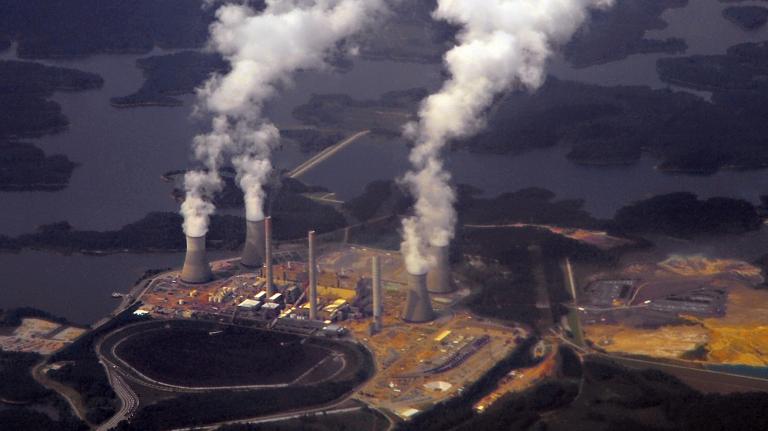
Basically, it’d be great if we all stopped eating tuna, for both of the reasons you mention: due to being high on the food chain, they often contain high levels of mercury (a byproduct of industry, particularly coal-fired power plants); and many species are overfished. Longlines, the sixty-foot-long baited lines used to catch many kinds of tuna, have a high bycatch. Purse seining for Pacific yellowfin tuna was responsible for all those dead dolphins, but this has apparently been improved.
No official agency is going to recommend that we stop eating tuna because a) the tuna people would be annoyed; b) when has the government ever told us to stop doing anything bad (have you seen cigarette labels in Europe?); and c) eating fish is still kind of good for you. And we love our tuna: Americans ate about 2.7 pounds of canned tuna per person in 2007.
If you’re not willing to change your tuna (sorry), here are a few ideas: If you can find local tuna, you very well may be able to ignore some of the mercury warnings. Plus, you’re a man. Children and women of childbearing age should not be eating much canned tuna, due to the dangers of developmental problems from mercury poisoning. See the maximum amount of tuna you should be eating here.
For most of us, it’s impossible to tell whether the tuna we wish to chew was killed when young or old. So when fishy questions arise, it’s helpful to turn to the many seafood guides available and choose by species instead of age. I like the NOAA FishWatch, which gives oodles of information, including how a fish is caught, sustainability status, lifecycle, etc. The Environmental Defense Fund has a very detailed list, and includes information about environmental contaminants. Albacore and yellowfin tuna caught in the U.S. and Canada make their “best” list; bigeye and yellowfin caught internationally on longlines are worst, as is bluefin. As you can see, it’s complex, so I think you should print a guide and keep it with you. Greenpeace and the Monterey Aquarium also offer guides.
Let me repeat: the easiest step of all would be to just stop eating tuna. Tuna is tasty, but it is suffering. And you probably wouldn’t eat a polar bear, even if it came in a handy can.
Comparatively,
Umbra
Comments
View as Flat
sindark Posted 12:32 pm
06 Apr 2009
One of the most reliable ways of locating tuna stocks is by following dolphins. Once you find dolphins feeding on the fish, you set your nets around and catch them. Of course, this method will sometimes lead to you catching dolphins as well. In eighteen years of dolphin set tuna fishing in the United States, 18 dolphins were recorded as caught, along with 34 tonnes of sharks and rays and 295 tons of other fish. Such by-catch is virtually always discarded. In an equivalent period of dolphin safe fishing (where electronic Fish Aggregation Devices are used instead), no dolphins were caught, but 237 tonnes of sharks and rays were, along with 15,500 tonnes of other fish. Again, this was discarded.
Dolphin safe fishing is also disproportionately likely to catch immature tuna, which have not yet reached their full size and which have contributed very little to reproducing the species, since tuna generally take a long time to reach sexual maturity.
This only makes sense if you strongly privilege dolphins over other forms of marine life.
Permalink
kipchoge Posted 7:33 pm
06 Apr 2009
dolphin. Some fishermen have taken advantage of this by setting their
nets around the dolphin herds in order to catch the large tuna beneath
them. In the 1970s, dolphin mortality was estimated to be hundreds of
thousands of dolphins per year. Now, after continued research,
improvements in fishing gear and techniques, and adoption of
international agreements, dolphin mortality has been reduced to under
1,000 dolphins annually. For more information, see NOAA's www.dolphinsafe.gov." (my bolding)
Permalink
sindark Posted 12:33 pm
06 Apr 2009
stresses that chasing dolphins is the greenest way to fish tuna.
Greenpeace agrees, as does the World Wildlife Fund.”
Permalink
billyrainbow Posted 1:16 pm
06 Apr 2009
We can learn to control population now, or have it forced on us in the typical ways - war, famine, disease, and as already mentioned, resource depletion and pollution.None of the above is new information. We have known these things for quite some time, in some cases written material on the problems dates back to the ancient Greeks, Romans, and Chinese.In some sense, it's almost a crime to make a prarmount virtue out of conservation when it's done without the primary focus being on conservation of our own numbers. The more we pare down our individual environmental footprints and the more we compromise our lifestyles to make room for more people, the more we hasten the inevitable catastrophe - perhaps even on the scale of an "Armageddon" - when there are no longer any conservation options available because there just isn't anything left to conserve, the vast numbers of humans needing whatever it is for their survival having already claimed it all.Conservation really is good policy, as is not just reducing but actually eliminationg all pollution. Even in a purely unemotional world of simple mathematics efficiency demands conservation in a realtively closed system, and even were the system not closed, excuses to grant exceptions are subject to high standards when having something immediately is more important than doing it right.i know that talking about population control opens a whole can of worms (which ought to be conserved, poor things), and there have been way too many really ugly things come out of that kind of discussion, like eugnecs and genocide, for example. And there's always the issues of who gets to decide who can have how many children, and what the criteria are for making the decisions. But we have got to provide those answers, and soon, or the fate of the world's tuna and polar bears either moot or among the least of all our species' worries.Have a nice day,
billy rainbow
Permalink
nereid Posted 5:36 pm
06 Apr 2009
Permalink
Pangolin Posted 7:42 pm
07 Apr 2009
Right now oil prices have collapsed in part because the shipping industry is idled. That's not going to continue forever. At some point declines in oil production will price out certain classes of fisherman and restrict the ranges of others. Whether the tuna can survive longer than the tuna fleets remains to be seen.
Permalink