Support Grist
Support nonprofit, independent environmental journalism.
Donate to Grist.
Arts and Minds

Built Trip

Brian Hayes' Infrastructure offers a tour of the "unnatural" side of America

By Jim Rossi
25 Oct 2005
Read more about: land stewardship
Tools: print | email | discuss | write to the editor | subscribe | RSS
Power lines.
Transmission accomplished.
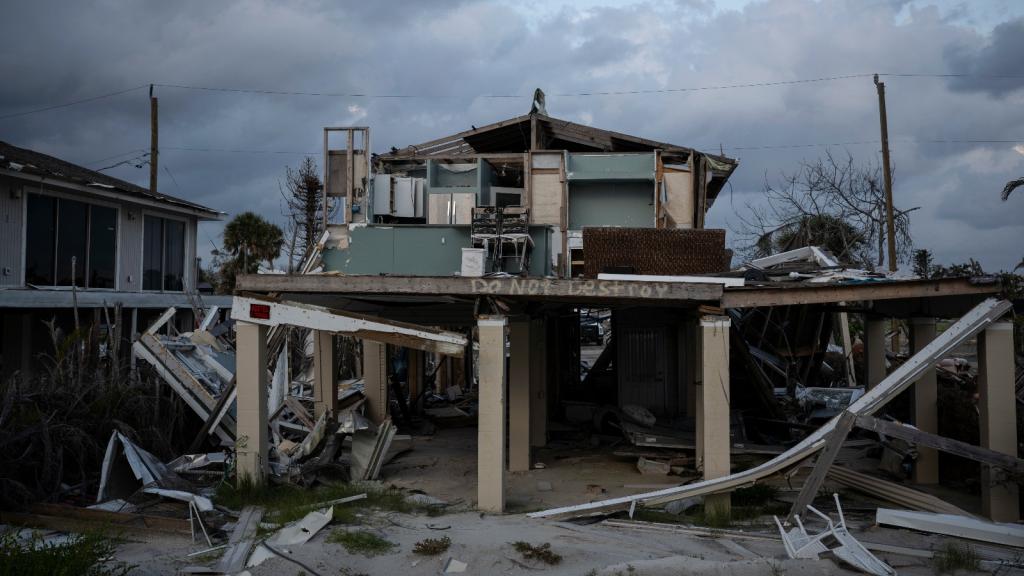
The unprecedented hurricane season that flooded New Orleans and flattened much of the Gulf Coast this summer brought both catastrophe and an historic opportunity: building more-sustainable cities and infrastructure has suddenly become a hot topic. New Orleans doesn't need only restored wetlands and stronger levees to offer protection from future hurricanes and rising sea levels. Homes and streets, highway overpasses and water pipes and power lines -- all must be rebuilt. The city is fast becoming a radical experiment in redesigning infrastructure on a landscape-wide scale. In other words, the timing for Infrastructure couldn't be better.

Brian Hayes, a senior writer at American Scientist who won a National Magazine Award in 1999, spent more than a decade on this book. The result is a brilliant, sometimes dizzying tour of this country's built environment. It's an avalanche of nuts-and-bolts explanations accompanied by 500 of Hayes' own spectacular color photographs, which illuminate subjects ranging from the futuristic -- like the Mojave Desert's Kramer Junction solar-energy station -- to the unlikely -- such as Staten Island's Fresh Kills landfill. While physically resembling a coffee-table book more than an Audubon field guide, Infrastructure delivers on its promise to be the "book of everything" for our human-made American landscape.

"Without a sense of how materials and energy flow through an industrial economy," writes Hayes, "you miss something about the world you live in." Most of us tap into this missing world every time we flip a switch or turn on a faucet, but we don't stop to think about how or why we get the desired effect. But Hayes brings us the hows and whys: from the wind farms of Altamont Pass, east of San Francisco, to the Gulf Coast's offshore oil rigs; from strip mining to drip irrigation; and from city water and sewage-treatment plants to New Orleans' levees, pumps, and canals, Infrastructure concisely covers energy, water, agriculture, transportation, communication, waste, and more.

Infrastructure cover.
Infrastructure: A Field Guide to the Industrial Landscape by Brian Hayes, W.W. Norton, 512 pgs., 2005.
Offering history and context, Hayes cuts through the spin. On the 1979 nuclear accident at Three Mile Island, for example: "Opponents of nuclear power interpret the accident as a demonstration of just how dangerous and uncontrollable the technology is," he writes. "Proponents look at the same evidence and argue that the accident shows the inherent safety of nuclear reactors, since just about everything that could have gone wrong did go wrong, and yet there was no serious harm done to public health."

And after running down the basics, problems, and potentials of every major energy source, Hayes offers his no-nonsense view on the future of our fossil-fuel society: "The prospect of running out of oil a few decades from now should not be cause for panic or despair," he concludes. "Given that the whole infrastructure of the petroleum industry was built in less than a hundred years, there should be plenty of time to create its replacement ... And if a world without gasoline seems unimaginable, look back to the 1850s, when a world without whale oil and a whaling industry must have seemed equally unlikely and forbidding."

While making no apologies for heavy industry, Hayes gives only passing mention to the landscape-wide scars resulting from many of these different technologies: deforestation, erosion, acid rain, PCBs, radiation. Infrastructure presents no photos or sidebars describing the Superfund sites on the Hudson River or the Hanford nuclear site, for example, nor does Hayes discuss the direct roles our natural ecosystem plays as part of our infrastructure. After all, forests scrub air pollution, topsoil filters rainwater, wetlands buffer against flooding, and coastal bays and estuaries nurture a fresh and healthy food supply -- if we leave them all intact.

But the things Hayes does include make up for that lack. For those of us who try to solve environmental problems, his opus might become a classic. If knowledge is power, Infrastructure is powerful; it becomes a sort of introductory handbook for achieving sustainable technologies. After all, wouldn't a working knowledge of coal-fired power plants help us understand new-source review and how to best cut emissions? Couldn't a frank discussion of the pluses and minuses of drip irrigation lead to improved water conservation in agriculture? Wouldn't knowing the ins and outs of natural-gas drilling help us determine whether efforts to "minimize impacts" represent green innovations or just empty promises?

Hayes' book achieves two great things: it makes the progress of technology seem more remarkable, and the problems less intractable. In this Infrastructure, the possibilities are endless.

Read more about: land stewardship
Tools: print | email | discuss | write to the editor | subscribe | RSS
is a science and outdoors writer who lives in San Francisco.
< Previous | Next >
Comments: (1 comment)

You are not logged in. Thus, you cannot post a comment. If you have a Gristmill account, log in below. If you don't have a Gristmill account, well, by all means go make one! Meet you back here in five.

Username: Password:

Forgot your password? Enter your username and click:

Incomplete

Sounds like a great book visually and intellectually but it is way too lopsided if it fails to include the interaction of technology with the natural world. How can you talk about lumber without talking about trees? That's like talking about oil without talking about dinosaurs!

http://goodwordswan.wildflowerstew.com

The comments of Grist users reflect the opinions of those individuals only, and do not necessarily reflect the viewpoints of Grist, its staff, its board members, their psychotherapists, or their aestheticians. Got it?


Also in Grist

The Week's Most Popular
From the Archives
Touched by an Angeles. A report from the Environmental Media Awards.
Damalot. Jacques Leslie's Deep Water sheds light on dam dramas.
The Chris Science Monitor. An interview with Chris Mooney, author of The Republican War on Science.

ADVERTISING POLICY


About Grist | Support Grist | Jobs Board | Archives | Grist by Email | RSS | Podcasts
Gristmill Blog | In the News | Ask Umbra® | Muckraker | Victual Reality | 'Tis the Season | The Grist List | The Bottom Line


Grist: Environmental News and Commentary
a beacon in the smog (tm) ©2007. Grist Magazine, Inc. All rights reserved. Gloom and doom with a sense of humor®.
Webmaster | Privacy Policy | Terms of Service | Trademarks