Support Grist
Support nonprofit, independent environmental journalism.
Donate to Grist.
Ask Umbra

Pack to the Future

On climate-induced relocation

By Umbra Fisk
17 Apr 2006
Read more about: advice | Ask Umbra | climate | all of these topics
Tools: print | email | discuss | write to the editor | subscribe | RSS
Got questions about the environment? Ask Umbra.
question Dear Umbra,

Given that there is a possibility/probability that sea levels will rise significantly [due to climate change], and that some parts of the world may become too hot while others could become too cold, where in the world will things be relatively "safe"? If I start thinking about moving my family to another country, in which direction should we be looking?

Michael Laird
Belgium (below sea level!)

answer Dearest Michael,

With the entire planet to choose from, specificity may be impossible, but we can look at general guidelines.

Oh, honey, remember when we lived below sea level?
Photo: iStockphoto.
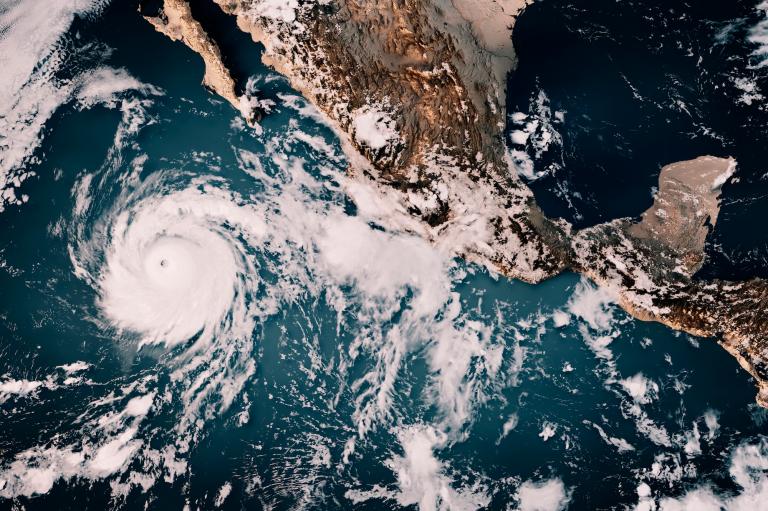
In terms of geographic location, it's true that climate refugees will not flee to Belgium. Low-lying coastal areas in general are at higher risk from rising sea levels, flooding, and tropical cyclones. Sea levels will rise anywhere from a conservative couple of feet -- sorry, a conservative 60 centimetres to a disastrous six metres. Your dream home, unless it floats, won't be near the sea, below sea level, on a small island, or in the cyclone pathway.

We may see -- may already be seeing -- other "extreme weather events," a coinage that sounds to me like a television show, but in daily life means things like loads of rain or searing heat. The upshot of this, as you plan for the perfect relocation, is to stay away from areas prone to flooding or landslides. Nothing steep, no river banks. On the other hand, you do want to have a secure water supply. To avoid searing heat, the best I can tell you is find a house built to cope with hot weather. Not through air conditioning, because that will use increasingly expensive (and climate-warming) energy, but through design.

Over on the cold bits of the planet, warming means the end of permafrost in tundra areas, as well as the disappearance of seasonal ice. Apparently when permafrost warms, the ground it held up can collapse, and this is causing serious physical disturbance in Arctic settlements. So we can remove the Arctic from our home-hunting list, along with all those warm coastal areas.

What else? A few predicted outcomes aren't terribly specific as to where and when. It's hard to predict how disease will spread as animals and humans relocate, for instance. If you move to a rural area and choose to go survivalist, grow your own food, and so on, you may be OK as weather patterns shift -- or you may not. Here is where there is actual scientific debate. Will Europe become colder and wetter, along with hotter in the summer, or just one or the other? Will the entire United States experience severe summer droughts, or just some regions? Don't know yet.

Given the primary importance of a well-established and funded public infrastructure, both in terms of preparation for change and response to crisis, I would stay in Europe. Also, this may sound crass, but recent experience has shown that the No. 1 rule is to avoid poverty. If you must be poor, be poor in a wealthy area. Better to be poor in Antwerp than in Angola, for instance. Area wealth will insure that infrastructure is maintained in the face of disaster or shortages.

I think your ideal choice is a well-run, progressive urban area in Western Europe, located inland and near a well-managed river, where you live in an eco-groovy house with water catchment and a large food garden. Oh, and don't come to the United States. Our wealth is a mirage at this point, we're deeply in debt, and the whole world has witnessed the pathetic response to our latest natural disaster.

Unpatriotically,
Umbra


Read more about: advice | Ask Umbra | climate | all of these topics
Tools: print | email | discuss | write to the editor | subscribe | RSS
Yours is to wonder why, hers is to answer (or try). Please send Umbra any nagging question pertaining to the environment -- but first check out her FAQs!
The claims made in this column may not reflect the views of this magazine. Neither the magazine nor the author guarantees that any advice contained in this column is wise or safe. Please use this column at your own risk.
Umbra Fisk is Grist Research Associate II, Hardcover and Periodicals Unit, floors 2B-4B.
< Previous | Next >
Comments: (2 comments)

You are not logged in. Thus, you cannot post a comment. If you have a Gristmill account, log in below. If you don't have a Gristmill account, well, by all means go make one! Meet you back here in five.

Username: Password:

Forgot your password? Enter your username and click:

Pack to the future:

I suspect people are not taking these things seriously.  For all our dollars we have spent on trying to get ahead of the climate, we are so totally unprepared for what is bound to come.

I have lived in two houses that burned to the ground, three that blew away totally in tornado's, four that flooded completely where we lost everything but some of our clothes on our backs and our family safe.  All of this happened in nine different houses, in two states and in 8 different cities.  It seemed like a very bad dream.

When we finally moved into a home of our own, I insisted it be far enough up the hill that water cound not reach us if the river went out, far enough down the hill to avoid a tornado and had smoke alarms in every room in the house plus the attic and cellar.  In over 20 years, we did not have anything bad happen at our home.

I still do not know why we were always in the wrong place at the wrong time, but it will provide stories to tell the grandkids for generations to come.

I figure living in the middle of the USA will make me as safe as will be possible.  When disaster happens, it will show no mercy, no matter how it comes.  I figure that all the times we had to start from scratch has made me a stonger person and I find I am much more able to "rough it" than anyone I know.  If you have never had to miss a meal, having to scramble for anything to eat will be so hard on most people.

We should pay more attention to how we supply our comforts and what the impact will be.  I think we have had it to good for to long.  We complain about the price of gas, but no one I know plans to cut vacations or share rides to work to save.  They seem to talk about how bad things are, but they will be worse if everyone doesn't do something even if it is small.  

Not sure about Europe

There has been scientific talk that global warming can lead to another ice age.  The influx of fresh water from melting glaciers can virutally shut down warm ocean currents (Gulf Stream, for example) leaving those areas where climate receives the benefit much colder (Northeast US and Western Europe).  Also, the Gaia theory suggests that the Earth is a network of complex systems that work together to maintain a certain "homeostasis" and therefore, will create an ice age to cool down a planet that is too hot.

More on this can be found at the following (even our own government!):

http://www.ngdc.noaa.gov/paleo/ctl/future1.html
http://www.newscientist.com/article.ns?
http://www.oceansonline.com/gaiaho.htmid=dn8398e1.html


MJ Graham

The comments of Grist users reflect the opinions of those individuals only, and do not necessarily reflect the viewpoints of Grist, its staff, its board members, their psychotherapists, or their aestheticians. Got it?


Also in Grist

The Week's Most Popular
From the Archives
Breaking the Cycle, by Umbra Fisk. On climate-change patterns.
Lyin' Tamer, by Umbra Fisk. On global warming.
Talk This Way, by Umbra Fisk. On talking to friends about climate change.

ADVERTISING POLICY


About Grist | Support Grist | Jobs Board | Archives | Grist by Email | RSS | Podcasts
Gristmill Blog | In the News | Ask Umbra® | Muckraker | Victual Reality | 'Tis the Season | The Grist List | The Bottom Line


Grist: Environmental News and Commentary
a beacon in the smog (tm) ©2007. Grist Magazine, Inc. All rights reserved. Gloom and doom with a sense of humor®.
Webmaster | Privacy Policy | Terms of Service | Trademarks